
Metria amella
Guenée, 1852
Live Oak Metria Moth
Metria amella, commonly known as the Live Oak Metria , is a of owlet moth in the Erebidae. It is native to North America and is associated with live oak . The species was described by Achille Guenée in 1852, originally placed in the Campometra. It is the sole species in the genus Metria, making it taxonomically distinctive among Erebidae.
Pronunciation
How to pronounce Metria amella: /ˈmɛ.tri.a æˈmɛl.la/
These audio files are automatically generated. While they are not always 100% accurate, they are a good starting point.
Identification
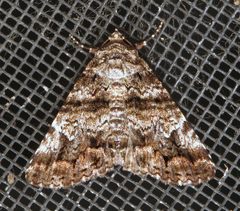
The combination of pale tan forewings with fine wavy lines and nearly white hindwings distinguishes Metria amella from similar Erebidae . It lacks the bold spotting or strong contrasting patterns seen in many related owlet moths. The Metria is , so any moth matching this description and occurring in association with live oaks in the southeastern United States can be confidently identified as this . Dissection of genitalia is not required for field identification given its unique appearance and restricted range.
Images
Appearance
Medium-sized with wingspan approximately 25–35 mm. Forewings are pale tan to buff-colored with fine, wavy transverse lines and a small dark discal spot. Hindwings are lighter, nearly white or pale gray, with faint marginal markings. Body is slender and uniformly colored, matching the forewings. are (thread-like) in both sexes.
Habitat
Associated with live oak (Quercus virginiana) woodlands and maritime forests. Found in coastal plain environments from Texas to North Carolina, including oak hammocks, scrub oak , and urban parks with mature live oaks. Larval is specifically the and leaf litter of live oak trees.
Distribution
to the southeastern United States. Range extends along the Atlantic and Gulf coastal plains from North Carolina south through Florida and west to Texas. Distribution closely follows that of its plant, Quercus virginiana.
Seasonality
are active from late winter through early summer, with peak activity in March and April in most of the range. In southern Florida, activity may begin in February. Single-brooded () throughout most of range; partial second possible in southern Florida.
Diet
Larvae feed exclusively on leaves of live oak (Quercus virginiana). do not feed.
Host Associations
- Quercus virginiana - larval plantExclusive ; larvae feed on leaves
Life Cycle
are laid on live oak leaves. Larvae feed on foliage, completing development in approximately 4–6 weeks. occurs in leaf litter or loose soil beneath trees. emerge the following season; overwinters as pupa.
Behavior
are and attracted to light. Larvae are solitary feeders on live oak foliage, resting on leaf undersides during daylight. No known defensive ; larvae drop from leaves on silk threads when disturbed.
Ecological Role
Primary consumer of live oak foliage. Serves as prey for birds, spiders, and . Contribution to nutrient cycling through leaf consumption and deposition is minor given low densities relative to plant .
Human Relevance
Occasional minor pest in urban live oak plantings when are high; defoliation is rarely significant. Serves as an for intact live oak . No economic importance.
Similar Taxa
- Iridopsis spp.Pale geometrid moths with similar resting posture, but have more angular wing margins and different forewing patterns including more pronounced lines or spots
- Renia spp.Related Erebidae with pale coloration, but Renia have more rounded forewings and typically show stronger dark discal spots or markings
- Zanclognatha spp.Similar size and pale color, but have more triangular forewings with distinct dark bands or patches, and different antennal structure in males
More Details
Taxonomic Note
Metria is a established for this , which was originally described in Campometra. Its placement within Erebinae reflects phylogenetic studies of the 'bombycoid' grade within Noctuoidea.
Conservation Status
Not evaluated by IUCN. Secure throughout range due to widespread distribution of plant, though localized declines possible with live oak loss.