
Celiptera frustulum
Guenée, 1852
Black Bit Moth
Pronunciation
How to pronounce Celiptera frustulum: /ˌsɛ.lɪpˈtɛ.ra ˈfrʌs.tʃu.lʌm/
These audio files are automatically generated. While they are not always 100% accurate, they are a good starting point.
Identification
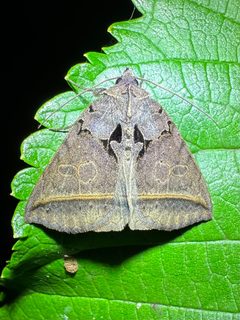
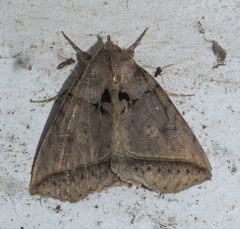
The combination of medium size (34–41 mm wingspan), dark forewings with a distinct "bit" or dark marking, and pale hindwings with dark margins distinguishes this from similar Celiptera species. The spring period (May–June) in eastern North America helps separate it from related with different . Larval association with black locust provides additional identification context where plants are known.
Images
Appearance
Medium-sized with a wingspan of 34–41 mm. Forewings are dark with a pattern of lighter markings; the "black bit" refers to a distinct dark marking. Hindwings are paler, typically grayish or whitish with darker margins. Body is robust and covered in fine .
Habitat
Associated with deciduous woodlands and forest edges where black locust (Robinia pseudoacacia) occurs. Found in both natural and disturbed supporting this plant.
Distribution
Eastern North America, ranging from the northeastern United States north to Ontario, Canada. Records include Vermont and surrounding regions.
Seasonality
active from May to June; two per year (). Larval stage occurs between adult periods.
Diet
Larvae feed exclusively on Robinia pseudoacacia (black locust). feeding habits are not documented.
Host Associations
- Robinia pseudoacacia - larval food plantblack locust
Life Cycle
with two per year. emerge in May and June. Larval development occurs on black locust, with presumably in soil or leaf litter. stage is not explicitly documented but likely as pupae or larvae.
Behavior
; are attracted to light. Larvae feed on foliage of plant.
Ecological Role
Herbivore as larvae, consuming foliage of black locust. Serves as prey for including birds, bats, and predatory arthropods. Contributes to nutrient cycling through herbivory and detritus production.
Human Relevance
Minor potential as a pest of black locust in forestry or ornamental plantings, though not documented as economically significant. Of interest to lepidopterists and naturalists.
Similar Taxa
- Other Celiptera speciesSimilar size and general appearance; distinguished by wing pattern details, period, and geographic range.
- Other Erebidae moths with dark forewings and pale hindwingsSuperficially similar color pattern; separated by specific wing markings, size, and plant association.
More Details
Taxonomic history
Described by Achille Guenée in 1852. Classified in Erebinae of Erebidae; previously placed in family Noctuidae under older classifications.
Observation frequency
Well-documented on citizen science platforms with over 1,500 observations, indicating it is readily encountered within its range and season.