
Caenurgia togataria
Walker, 1862
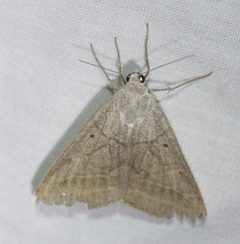
Caenurgia togataria is a in the Erebidae, first described by Francis Walker in 1862. It is distributed across the southern United States and Mexico. The species has a wingspan of approximately 37 mm. It belongs to the Erebinae, a diverse group of moths commonly known as underwings and related forms.

Pronunciation
How to pronounce Caenurgia togataria: /seɪˈnɜːrdʒiə ˌtoʊɡəˈtɛəriə/
These audio files are automatically generated. While they are not always 100% accurate, they are a good starting point.
Identification
Distinguished from other Caenurgia by geographic range and presumably genitalic characters, though specific diagnostic features are not documented in available sources. The Caenurgia contains relatively few species, and accurate identification likely requires examination of genitalia or molecular analysis.
Images
Appearance
Wingspan approximately 37 mm. Specific coloration and pattern details are not documented in available sources.
Distribution
Southern United States, including California, south to Mexico. Records indicate presence across this range, though specific associations within these regions are not documented.
Similar Taxa
- Other Caenurgia speciesCongeneric may overlap in range and require careful examination for separation; the contains few species but detailed distinguishing features are not widely documented in general sources.
- Erebidae moths in subfamily ErebinaeBroad similarity in general body plan and size range to many erebine moths; precise identification to and level requires knowledge.
More Details
Taxonomic history
Originally described as Anaitis togataria by Walker in 1862, later transferred to the Caenurgia. The basionym reflects its historical placement in a different genus within the same .
Data availability
Despite 870 iNaturalist observations, detailed biological information ( preferences, plants, ) remains sparse in published literature and aggregated databases.