
Catocala serena
Edwards, 1864
Serene Underwing
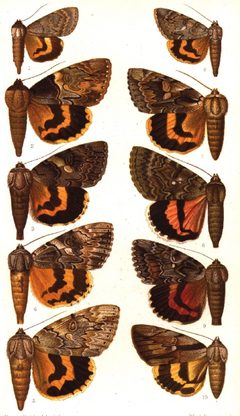
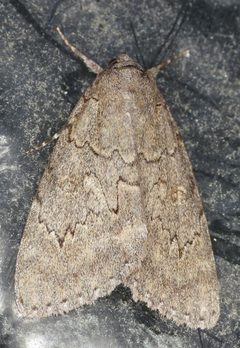
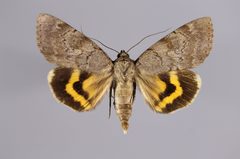
Catocala serena, the serene underwing, is a in the Erebidae. It is found in eastern North America from southern Ontario and New England south to Tennessee, and west to Illinois and eastern Wisconsin. are active from July to September with one per year. The larvae feed on shagbark hickory (Carya ovata) and black walnut (Juglans nigra).
Pronunciation
How to pronounce Catocala serena: //ˈkætəkələ səˈriːnə//
These audio files are automatically generated. While they are not always 100% accurate, they are a good starting point.
Identification
As a member of the Catocala, this possesses cryptic forewings that conceal brightly colored hindwings when at rest. The hindwing pattern is characteristic of the genus, though specific diagnostic features distinguishing C. serena from other Catocala species are not documented in available sources. The wingspan measures 55–60 mm.
Images
Habitat
Associated with deciduous forests containing trees, particularly shagbark hickory and black walnut.
Distribution
Southern Ontario, New York, New Jersey, Connecticut, Tennessee, Pennsylvania, Illinois, and eastern Wisconsin.
Seasonality
are on wing from July to September depending on location. One per year.
Diet
Larvae feed on Carya ovata (shagbark hickory) and Juglans nigra (black walnut). feeding habits are not documented.
Host Associations
- Carya ovata - larval foodplantshagbark hickory
- Juglans nigra - larval foodplantblack walnut
Life Cycle
Probably one per year. Specific details of , larval, and pupal stages are not documented in available sources.
Behavior
are and attracted to light. Like other Catocala , they likely display the characteristic underwing of flashing brightly colored hindwings when disturbed to startle .
Ecological Role
Larval herbivore on hardwood trees; likely serve as prey for and may contribute to nutrient cycling as detritus after death.
Similar Taxa
- Catocala aholibahAnother large Catocala with similar size and underwing ; distinguished by specific hindwing pattern details not specified in available sources
- Catocala verillianaSmaller Catocala found in similar ; distinguished by smaller wingspan and different hindwing coloration
Sources and further reading
- BugGuide
- Wikipedia
- GBIF taxonomy match
- iNaturalist taxon
- NCBI Taxonomy
- Catalogue of Life
- A Gathering of Lepidopterists: Who's Who of the Butterfly, Moth Experts | Bug Squad
- Noah Crockette: From an 11-Year-Old Bohart Intern to an 18-Year-Old Entomology Student at Cornell | Bug Squad
- Periodical Cicadas, 2024: Entomologists Prepare for the Six-Week Serenade
- Got Moths? Celebrate National Moth Week and Global Citizen Science
- Bug Eric: National Moth Week Recap, 2015
- Bug Eric: National Moth Week Recap for Colorado Springs