
Catocala miranda
H. Edwards, 1881
Miranda underwing
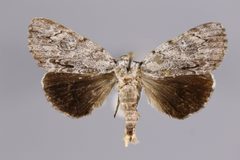
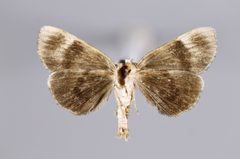
Catocala miranda is a in the Erebidae, first described by Henry Edwards in 1881. It is commonly known as the Miranda underwing, a name reflecting the 's characteristic hidden hindwing patterns. The occurs in the eastern and southeastern United States, with active in late spring. The larvae feed on hawthorns (Crataegus).
Pronunciation
How to pronounce Catocala miranda: /ˌkætəˈkeɪlə maɪˈrændə/
These audio files are automatically generated. While they are not always 100% accurate, they are a good starting point.
Identification
Catocala miranda is a small underwing with a wingspan of 37–45 mm. As with other members of the Catocala, the forewings are typically held together over the back at rest, concealing the more brightly patterned hindwings beneath. Specific distinguishing features from similar Catocala are not documented in available sources.
Images
Distribution
Found in the United States from Illinois, Pennsylvania, and Massachusetts south to Florida, and west to western North Carolina.
Seasonality
are on wing from May to June. There is probably one per year.
Diet
The larvae feed on Crataegus (hawthorns).
Host Associations
- Crataegus - larval food plant
Life Cycle
Probably (one per year).
Similar Taxa
- Other Catocala speciesThe Catocala contains numerous similar underwing distinguished primarily by hindwing coloration and pattern, which are normally hidden at rest; precise differentiation of C. miranda from requires examination of these concealed features.
Sources and further reading
- BugGuide
- Wikipedia
- GBIF taxonomy match
- iNaturalist taxon
- NCBI Taxonomy
- Catalogue of Life
- UBI Professor Demonstrates 'How to Draw a Bug' at Bohart Museum Open House | Bug Squad
- A Gathering of Lepidopterists: Who's Who of the Butterfly, Moth Experts | Bug Squad
- Learn How to Write a Research Paper | Bug Squad
- International Scientists at the Bohart Museum Open House | Bug Squad
- A Dragonfly to Behold: Within an Arm's Reach | Bug Squad
- Why the House Fly Should Join the Ranks of Agricultural Waste Recyclers