
Catocala minuta
Edwards, W.H., 1864
Little Underwing
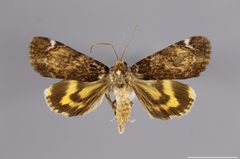
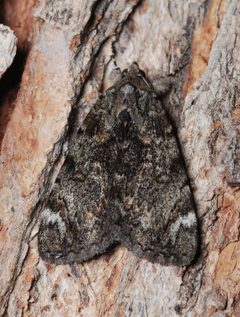
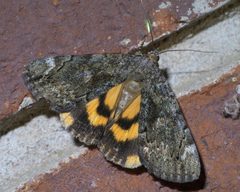
Catocala minuta, commonly known as the little underwing, is a in the Erebidae. The was first described by William Henry Edwards in 1864. It is one of approximately 250 species in the Catocala, which are characterized by dull forewings that conceal brightly colored hindwings. The larvae feed on species of honey locust (Gleditsia).
Pronunciation
How to pronounce Catocala minuta: //ˈkætəˌkeɪlə mɪˈnuːtə//
These audio files are automatically generated. While they are not always 100% accurate, they are a good starting point.
Identification
A small underwing with wingspan of 35–45 mm, smaller than many . Distinguished from similar Catocala by size and geographic range, though precise diagnostic features require examination of hindwing pattern and genitalia. The specific epithet 'minuta' refers to its relatively small size within the .
Images
Appearance
Wingspan 35–45 mm. Forewings are dull-colored, providing camouflage when at rest with wings folded. Hindwings are concealed at rest but reveal bold, colorful patterns when wings are spread. Specific coloration of hindwings for this is not detailed in available sources.
Habitat
Associated with supporting its larval plants, honey locust (Gleditsia). Specific habitat preferences of not documented.
Distribution
Eastern and central United States: from New York south to Florida, west to Texas, and north to South Dakota, Indiana, and Michigan.
Seasonality
active from June to August, with timing varying by location. Probably one per year.
Diet
Larvae feed on Gleditsia aquatica (water locust) and Gleditsia triacanthos (honey locust). diet not documented.
Host Associations
- Gleditsia aquatica - larval food plant
- Gleditsia triacanthos - larval food plant
Life Cycle
Probably (one per year). Complete with , larval, pupal, and stages. Larval stage feeds on plants; details not documented.
Behavior
are and attracted to light. Like other underwing moths, they rest with forewings folded over the back, concealing the hindwings. When disturbed, they may flash the brightly colored hindwings as a startle defense before taking .
Ecological Role
Larvae are herbivores that feed on honey locust trees. may serve as and as prey for including bats, birds, and arthropods. Specific ecological interactions not documented.
Similar Taxa
- Catocala verillianaAnother small underwing ; C. minuta distinguished by size and geographic range
- Catocala aholibahLarger underwing found in similar ; C. minuta notably smaller
- Other Catocala speciesOver 250 in ; identification requires examination of hindwing pattern, size, and genitalia
More Details
Etymology
The specific epithet 'minuta' refers to the relatively small size of this compared to other underwing moths in the Catocala.
Taxonomic history
Described by William Henry Edwards in 1864. The name Catocala is derived from Greek, meaning 'beautiful below', referring to the colorful hindwings concealed beneath the cryptic forewings.
Sources and further reading
- BugGuide
- Wikipedia
- GBIF taxonomy match
- iNaturalist taxon
- NCBI Taxonomy
- Catalogue of Life
- A Gathering of Lepidopterists: Who's Who of the Butterfly, Moth Experts | Bug Squad
- Got Moths? Celebrate National Moth Week and Global Citizen Science
- Bug Eric: National Moth Week Recap, 2015
- Bug Eric: National Moth Week Recap for Colorado Springs
- Bug Eric: National Moth Week 2024 Recap from Kansas City
- Tiny raptors: Mantisflies, Mantispidae, and Praying mantises, Mantidae — Bug of the Week