
Catocala jair
Strecker, 1897
Jair underwing, Barrens underwing
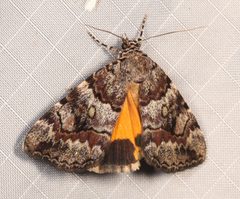
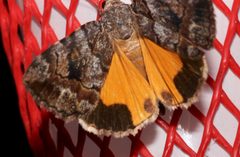
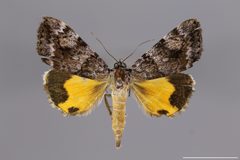
Catocala jair is a small underwing in the Erebidae, first described by Strecker in 1897. It is restricted to a narrow coastal plain distribution in the southeastern United States, occurring in the New Jersey Pine Barrens, coastal North Carolina, and northern Florida. The has a wingspan of 35–40 mm and are active from May to June, with likely one per year.
Pronunciation
How to pronounce Catocala jair: //kəˈtɒkələ ˈdʒaɪɚ//
These audio files are automatically generated. While they are not always 100% accurate, they are a good starting point.
Identification
Distinguished from other Catocala by small size (35–40 mm wingspan), restricted southeastern coastal plain distribution, and early period (May–June). Specific hindwing pattern and forewing markings require examination of specimens for definitive identification; dissection of genitalia may be necessary for confirmation.
Images
Habitat
Coastal plain pine barrens and sandy scrub . Associated with oak-dominated vegetation in fire-maintained pine .
Distribution
to southeastern United States coastal plain: New Jersey Pine Barrens, Bladen County coastal plain of North Carolina, and northern half of Florida.
Seasonality
active May to June; likely with one per year.
Diet
Larvae feed on Quercus (oak) .
Host Associations
- Quercus - larval food plantSpecific oak not identified in sources
Life Cycle
Complete with , larva, pupa, and stages. Larval stage feeds on oak foliage. site unknown. Adults emerge in spring (May–June).
Behavior
are . Like other underwing moths, likely rests on tree bark with forewings concealing brightly patterned hindwings; may flash hindwings when disturbed as a startle defense. Not strongly attracted to lights compared to some .
Ecological Role
Larval herbivore on oaks; contributes to nutrient cycling in pine barren . likely serve as prey for including bats and birds.
Human Relevance
Subject of interest to lepidopterists due to restricted range and specificity. Potential for pine barren health. Not known to be of economic importance.
Similar Taxa
- Catocala speciesOther underwing moths share general and ; require examination of size, distribution, period, and genitalia for separation
- Catocala epioneSimilar small size and early period, but C. epione has broader distribution and different hindwing pattern
More Details
Taxonomic history
Originally described by Strecker in 1897. The 'Barrens underwing' reflects its strong association with pine barren .
Conservation status
Not formally assessed; restricted range and specialized suggest potential vulnerability to habitat loss and fire suppression in pine barren .
Sources and further reading
- BugGuide
- Wikipedia
- GBIF taxonomy match
- iNaturalist taxon
- NCBI Taxonomy
- Catalogue of Life
- A Gathering of Lepidopterists: Who's Who of the Butterfly, Moth Experts | Bug Squad
- Got Moths? Celebrate National Moth Week and Global Citizen Science
- Bug Eric: National Moth Week Recap, 2015
- Bug Eric: National Moth Week Recap for Colorado Springs
- Bug Eric: National Moth Week 2024 Recap from Kansas City
- Bug Eric: New Mexico Night Bugs