
Catocala dejecta
Strecker, 1880
Dejected Underwing
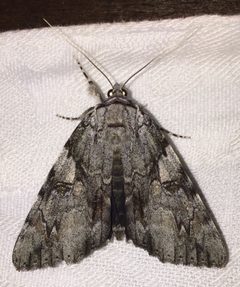
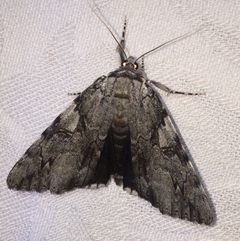
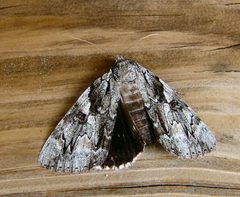
Catocala dejecta, the Dejected Underwing, is a in the Erebidae. It is found in eastern and central North America, from Massachusetts and Connecticut south to Florida, west to Texas and Oklahoma, and north to southern Ontario. have a wingspan of 56–73 mm and are active from June to October, with timing varying by location. The larvae feed on hickories (Carya glabra, Carya ovata) and oaks (Quercus ).
Pronunciation
How to pronounce Catocala dejecta: //kæˈtoʊkələ dɪˈdʒɛktə//
These audio files are automatically generated. While they are not always 100% accurate, they are a good starting point.
Identification
As a member of the Catocala, this has cryptic forewings that conceal brightly colored hindwings when at rest. The hindwings are typically banded with orange, red, black, or white patterns that are flashed as a startle display when the is disturbed. Specific identification to species level requires examination of wing pattern details, particularly the configuration of bands and spots on the hindwings, and often necessitates reference to specialized keys for underwing moths.
Images
Distribution
Eastern and central North America: Massachusetts and Connecticut south through New Jersey to Florida, west to Texas and Oklahoma, and north to southern Ontario.
Seasonality
are on wing from June to October depending on location.
Diet
Larvae feed on Carya glabra (pignut hickory), Carya ovata (shagbark hickory), and Quercus (oaks). diet not specified in sources.
Host Associations
- Carya glabra - larval plantpignut hickory
- Carya ovata - larval plantshagbark hickory
- Quercus - larval plantoak
Similar Taxa
- Other Catocala speciesAll underwing moths share the characteristic of cryptic forewings concealing colorful hindwings used in startle displays. Specific differentiation requires detailed examination of hindwing pattern elements.
Sources and further reading
- BugGuide
- Wikipedia
- GBIF taxonomy match
- iNaturalist taxon
- NCBI Taxonomy
- Catalogue of Life
- A Gathering of Lepidopterists: Who's Who of the Butterfly, Moth Experts | Bug Squad
- Got Moths? Celebrate National Moth Week and Global Citizen Science
- Bug Eric: National Moth Week Recap, 2015
- Bug Eric: National Moth Week Recap for Colorado Springs
- Bug Eric: National Moth Week 2024 Recap from Kansas City
- Bug Eric: New Mexico Night Bugs