Catocala chelidonia
Grote, 1881
Catocala chelidonia is a in the Erebidae, first described by Grote in 1881. It belongs to the Catocala, commonly known as underwing moths, characterized by cryptic forewings that conceal brightly colored hindwings. The occurs in the southwestern United States and has three recognized with distinct geographic ranges. are active during summer months, and larvae feed on oak species.
Pronunciation
How to pronounce Catocala chelidonia: //ˌkætəˈkeɪlə ˌkɛlɪˈdoʊniə//
These audio files are automatically generated. While they are not always 100% accurate, they are a good starting point.
Identification
Distinguished from other Catocala by geographic range and classification. C. chelidonia chelidonia occurs from southern Nevada and south-central Utah southward through Arizona to New Mexico; C. chelidonia occidentalis is found along the western desert edge in southern California northward to Trinity County; C. chelidonia uniforma occurs in mountains of southeastern Arizona and southwestern New Mexico. Subspecies identification requires examination of geographic origin and subtle morphological differences described by Hawks (2010).
Images
Appearance
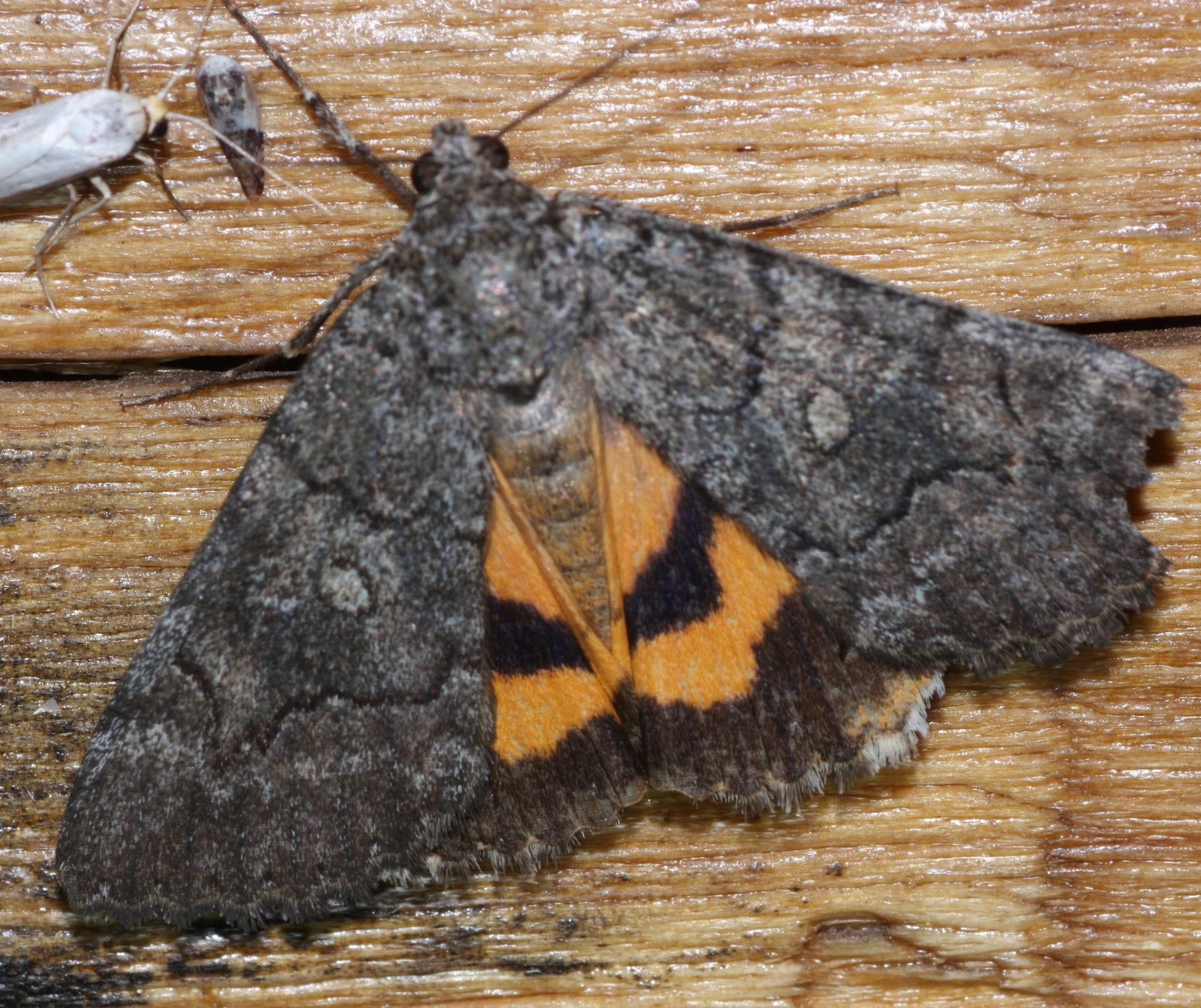
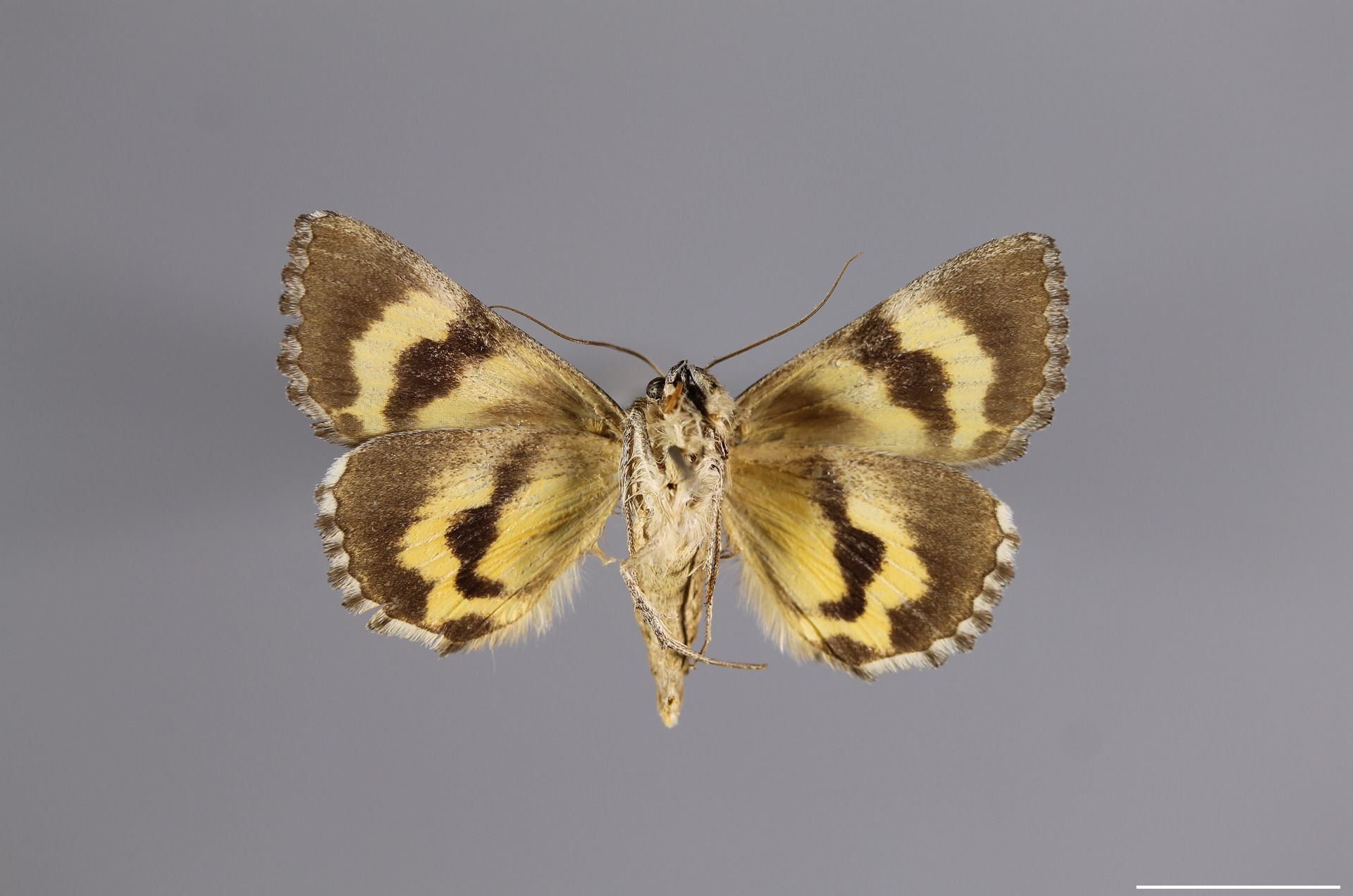
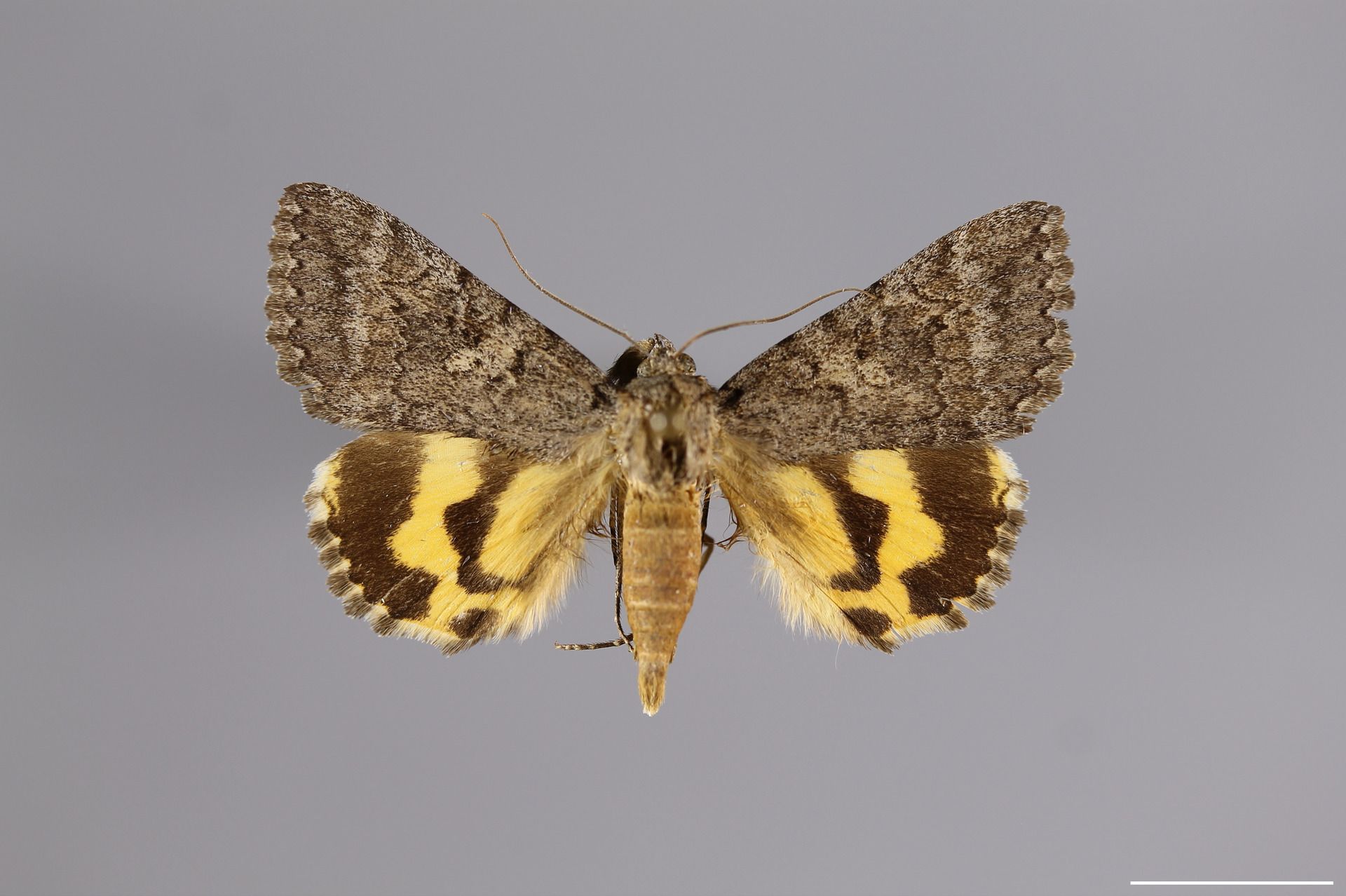
Wingspan 45–50 mm. Like other Catocala , forewings are cryptically colored in muted browns and grays to resemble bark or dead leaves when at rest. Hindwings are concealed beneath forewings at rest and display bold coloration when exposed. Specific hindwing pattern for C. chelidonia not described in available sources.
Habitat
Associated with oak-containing in arid and semi-arid regions of the southwestern United States. Occurs in dry mixed conifer forest with oaks at elevations around 7,000 feet, as well as lower elevation desert edges and mountain habitats.
Distribution
Southwestern United States: from Arizona and Utah to California. Three have more restricted ranges: C. c. chelidonia in southern Nevada, Utah, Arizona, and New Mexico; C. c. occidentalis in California; C. c. uniforma in southeastern Arizona and southwestern New Mexico mountains.
Seasonality
on wing from June to September, with timing varying by location. Probably one per year.
Diet
Larvae feed on Quercus (oaks). diet not specified in available sources.
Host Associations
- Quercus - larval plantSpecific oak not identified
Life Cycle
Probably (one per year). Larval stage feeds on oak foliage. and details not specified in available sources.
Behavior
are . Like other underwing moths, typically rests with forewings folded over , concealing brightly colored hindwings. When disturbed, may flash hindwings as startle defense. Normal is to remain on periphery of lighted areas rather than coming directly to light sources.
Ecological Role
Larval herbivore on oaks. may serve as food source for including bats, birds, and spiders. Specific ecological interactions not documented in available sources.
Human Relevance
Subject of interest to lepidopterists and enthusiasts. Featured in National Moth Week events as representative of underwing moth diversity. No economic significance documented.
Similar Taxa
- Other Catocala speciesShare cryptic forewing and colorful hindwing . Distinguished by hindwing color pattern, geographic range, and genitalia.
More Details
Subspecies
Three recognized based on geographic and morphological differences: Catocala chelidonia chelidonia (nominate subspecies), C. c. occidentalis, and C. c. uniforma, described by Hawks in 2010.
Sources and further reading
- BugGuide
- Wikipedia
- GBIF taxonomy match
- iNaturalist taxon
- NCBI Taxonomy
- Catalogue of Life
- A Gathering of Lepidopterists: Who's Who of the Butterfly, Moth Experts | Bug Squad
- Got Moths? Celebrate National Moth Week and Global Citizen Science
- Bug Eric: National Moth Week Recap, 2015
- Bug Eric: National Moth Week Recap for Colorado Springs
- Bug Eric: National Moth Week 2024 Recap from Kansas City
- Bug Eric: New Mexico Night Bugs