
Catocala atocala
Brou, 1985
Brou's underwing, Nutmeg Underwing, atocala underwing
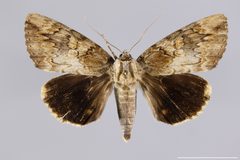
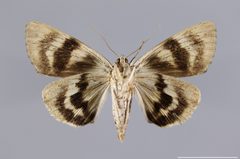
Catocala atocala is a in the Erebidae, first described by Brou in 1985. It is to the United States with a primary range in the lower Mississippi River drainage. The is notable for its specialized larval diet on nutmeg hickory. fly during mid-summer and possess the characteristic underwing of the Catocala, with cryptic forewings concealing brightly patterned hindwings.
Pronunciation
How to pronounce Catocala atocala: /kæt.oʊˈkæ.lə æ.toʊˈkæ.lə/
These audio files are automatically generated. While they are not always 100% accurate, they are a good starting point.
Identification
Distinguished from other Catocala by geographic distribution centered on the lower Mississippi River drainage and association with nutmeg hickory as larval . Forewing length of 33–37 mm provides a size reference. Specific hindwing color pattern and forewing maculation require examination of specimens for definitive identification.
Images
Appearance
Forewing length measures 33–37 mm. Like other underwing moths, forewings are dull-colored and serve as camouflage when at rest, covering the more vividly marked hindwings. Hindwing pattern details are not explicitly documented in available sources.
Habitat
Associated with forests containing nutmeg hickory (Carya myristiciformis), the primary larval . Distribution centered in bottomland and riverine forests of the lower Mississippi River drainage.
Distribution
to the United States. Primary range: lower Mississippi River drainage in Louisiana and Mississippi. Additional records from southern Illinois, Oklahoma, Texas, and Florida.
Seasonality
active July to August.
Diet
Larvae feed on nutmeg hickory (Carya myristiciformis). Under laboratory conditions, larvae have been observed to accept butternut (Juglans cinerea) and black walnut (Juglans nigra). feeding habits are not documented.
Host Associations
- Carya myristiciformis - primary larval nutmeg hickory
- Juglans cinerea - laboratory-accepted butternut; not confirmed in field
- Juglans nigra - laboratory-accepted black walnut; not confirmed in field
Life Cycle
Complete with , larval, pupal, and stages. Larvae are specialized feeders on nutmeg hickory. Timing of stages is not documented.
Behavior
are . Like other underwing moths, typically rests with forewings folded over the back, concealing the hindwings. Specific or defensive are not documented.
Ecological Role
Larval herbivore on nutmeg hickory. Specific roles as prey or are not documented.
Human Relevance
Subject of entomological interest due to restricted range and specialized association. No documented economic or cultural significance.
Similar Taxa
- Catocala epioneEpione underwing; also found in eastern and central United States, but with different associations and hindwing pattern
- Other Catocala speciesMany underwing moths share similar forewing ; identification requires examination of hindwing pattern and geographic range
More Details
Conservation status
No formal conservation assessment documented. Restricted range and specialized association on nutmeg hickory may warrant monitoring.
Research needs
Field confirmation of secondary use, detailed hindwing pattern description, and timing require further study.
Sources and further reading
- BugGuide
- Wikipedia
- GBIF taxonomy match
- iNaturalist taxon
- NCBI Taxonomy
- Catalogue of Life
- A Gathering of Lepidopterists: Who's Who of the Butterfly, Moth Experts | Bug Squad
- Got Moths? Celebrate National Moth Week and Global Citizen Science
- Bug Eric: National Moth Week Recap, 2015
- Bug Eric: National Moth Week Recap for Colorado Springs
- Bug Eric: National Moth Week 2024 Recap from Kansas City
- Bug Eric: New Mexico Night Bugs