
Pygarctia abdominalis
Grote, 1871
Yellow-edged Pygarctia, Orange-bodied Pygarctia, Yellow-edged Tussock Moth
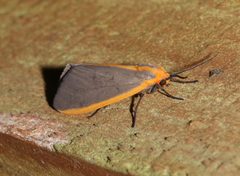
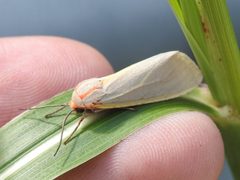
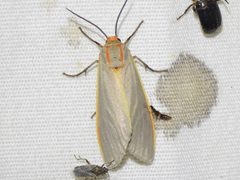
Pygarctia abdominalis is a tiger moth in the Erebidae, described by Augustus Radcliffe Grote in 1871. It is found in the southeastern and south-central United States. The exhibits in size, with females notably larger than males. are active primarily during spring and summer months.
Pronunciation
How to pronounce Pygarctia abdominalis: //paɪˈɡɑrk.ti.ə æbˌdɑməˈneɪlɪs//
These audio files are automatically generated. While they are not always 100% accurate, they are a good starting point.
Identification
Distinguished from by the combination of size range and geographic distribution. The pronounced sexual size dimorphism (female wingspan ~45 mm, male ~35 mm) is a notable characteristic. Specific diagnostic features separating it from other Pygarctia are not documented in available sources.
Images
Distribution
United States, ranging from New Jersey south to Florida and west to Texas. Records indicate presence across the southeastern and south-central regions of the country.
Seasonality
most common from April to August. In Florida, records extend from February through September, with peaks in April–June and August–September.
Diet
Larvae have been reported feeding on in the Euphorbiaceae and Apocynaceae.
More Details
Taxonomic History
Described by Augustus Radcliffe Grote in 1871. The belongs to the tiger moth Arctiinae, now classified within Erebidae following molecular phylogenetic revisions of Lepidoptera.
Sources and further reading
- BugGuide
- Wikipedia
- GBIF taxonomy match
- iNaturalist taxon
- NCBI Taxonomy
- Catalogue of Life
- Mini-review of the Cicindelidia abdominalis species-group | Beetles In The Bush
- Ospriocerus abdominalis | Beetles In The Bush
- The (almost) Florida-endemic Cicindelidia scabrosa | Beetles In The Bush
- Of Bots and Warbles | Beetles In The Bush
- ID Challenge #10 | Beetles In The Bush
- Rediscovery of Cicindela scabrosa floridana | Beetles In The Bush