
Pagara
Walker, 1856
Species Guides
1- Pagara simplex(Mouse-colored Tiger Moth)
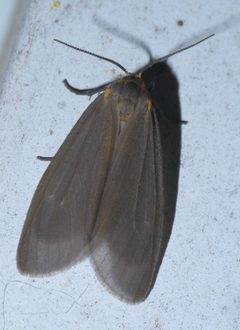
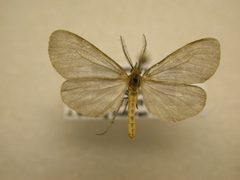
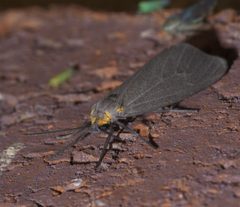
Pagara is a in the Erebidae, established by Francis Walker in 1856. Its sole , Pagara simplex (the mouse-colored lichen moth), occurs across the eastern and central United States. The genus belongs to the Arctiinae (tussock moths) and tribe Lithosiini (lichen moths). are small with a wingspan of approximately 23 mm. Formerly, Pagara fuscipes was included but has been reclassified.
Pronunciation
How to pronounce Pagara: //ˈpæɡərə//
These audio files are automatically generated. While they are not always 100% accurate, they are a good starting point.
Identification
The Pagara is currently represented by a single , P. simplex, distinguished from other Lithosiini by its small size (wingspan ~23 mm) and uniformly dull, mouse-gray coloration. The former species P. fuscipes has been removed from this genus. Detailed diagnostic features separating Pagara from related lithosiine genera are not well documented in available sources.
Images
Distribution
Eastern and central United States: recorded from Alabama, Arkansas, Florida, Georgia, Illinois, Indiana, Iowa, Kansas, Kentucky, Maryland, Mississippi, New Hampshire, North Carolina, Ohio, Oklahoma, South Carolina, and Tennessee.
Seasonality
active year-round in the southern portion of the range; specific seasonal patterns for northern not documented.
Similar Taxa
- Other Lithosiini generaPagara shares the general of lichen moths (dull coloration, small to medium size) with related in the tribe Lithosiini; precise distinguishing characters require examination.
More Details
Taxonomic history
Pagara was described by Francis Walker in 1856. The was formerly considered to contain two , but Pagara fuscipes (Grote, 1883) has been reclassified, leaving P. simplex as the only valid species. The genus is classified in the tribe Lithosiini within the Arctiinae.
Activity patterns
The year-round activity in southern regions suggests the may be multivoltine or have overlapping in warmer climates, though this has not been formally studied.