
Euchaetes antica
Walker, 1856
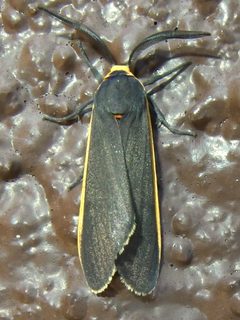
Euchaetes antica is a small in the Erebidae, described by Francis Walker in 1856. It is distributed across the southwestern United States and Central America, ranging from Arizona and New Mexico south through Mexico to Nicaragua, Honduras, and Guatemala. The exhibits in forewing length, with males measuring 13–15 mm and females 16–20 mm. Larvae feed specifically on Asclepias subverticillata, a milkweed species.
Pronunciation
How to pronounce Euchaetes antica: //juːˈkeɪtiːz ˈæntɪkə//
These audio files are automatically generated. While they are not always 100% accurate, they are a good starting point.
Identification
Distinguished from other Euchaetes by geographic range and plant association with Asclepias subverticillata. Smaller than the widespread Euchaetes egle (milkweed tussock ), which occurs in eastern and central North America. Male forewing length under 16 mm and female forewing length under 21 mm fall below typical measurements for E. egle. The southwestern U.S. and Central American distribution does not overlap with E. egle's primarily eastern range.
Images
Habitat
Associated with supporting Asclepias subverticillata, a milkweed . Specific habitat details not documented, but likely includes arid and semi-arid regions given the distribution across southwestern North America and Central America.
Distribution
Arizona and New Mexico in the United States, south through Mexico to Nicaragua, Honduras, and Guatemala.
Diet
Larvae feed on Asclepias subverticillata (whorled milkweed). feeding habits not documented.
Host Associations
- Asclepias subverticillata - larval plantsole documented ; larvae feed on foliage
Life Cycle
Complete with , larva, pupa, and stages. Specific timing and duration of stages not documented. Presumed to have multiple per year given the warm-climate distribution, but this is not confirmed.
Behavior
Larval feeding not described in detail. are , consistent with Erebidae.
Ecological Role
Specialized herbivore on Asclepias subverticillata. Likely sequesters cardiac glycosides from plant, as documented in Euchaetes egle, conferring chemical defense against . Specific ecological interactions not studied.
Human Relevance
No documented economic importance. Not known to be a significant agricultural pest. Potential interest to lepidopterists and naturalists in its range.
Similar Taxa
- Euchaetes egleLarger size (males 18–20 mm, females 22–24 mm forewing length), eastern and central North American distribution, and broader range on multiple Asclepias including A. syriaca and A. incarnata.
More Details
Taxonomic history
Originally described as Halesidota antica by Francis Walker in 1856; later transferred to Euchaetes.
Sources and further reading
- BugGuide
- Wikipedia
- GBIF taxonomy match
- iNaturalist taxon
- NCBI Taxonomy
- Catalogue of Life
- Bugs in orange and black - Monarch butterfly, Danaus plexippus Milkweed Bug - Oncopeltus fasciatus; Milkweed tiger moth, Euchaetes egle — Bug of the Week
- Bugs in Orange and Black: Monarch Butterfly, Milkweed Leaf Beetle, Milkweed Bug, and Milkweed Tiger Moth — Bug of the Week
- Bug in orange and black: Milkweed tussock moth, Euchaetes egle, and its caterpillars have tricks but no treats for hungry predators — Bug of the Week
- The other monarch caterpillar: Milkweed tussock moth, Euchaetes egle — Bug of the Week
- Save some milkweed for me! Monarchs and the milkweed tussock moth, Euchaetes egle — Bug of the Week
- Gelechiidae | Beetles In The Bush