
Cisseps
Franclemont, 1936
scape moths
Species Guides
1- Cisseps fulvicollis(Yellow-collared Scape Moth)
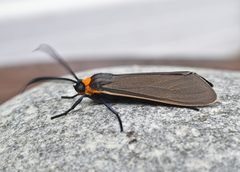
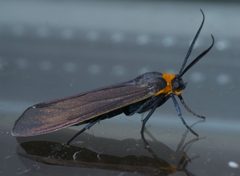
Cisseps is a of in the Erebidae, established by John G. Franclemont in 1936. The genus contains three described , with Cisseps fulvicollis (yellow-collared scape moth) being the most widely recognized. These moths are notable for their daytime activity and aposematic coloration, typically featuring a bright yellow or orange collar against a black body.
Pronunciation
How to pronounce Cisseps: /ˈsɪsɛps/
These audio files are automatically generated. While they are not always 100% accurate, they are a good starting point.
Identification
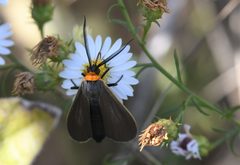
Members of Cisseps can be distinguished from similar tiger moths by the combination of a bright yellow or orange collar (the 'scape' that gives the ) on a predominantly black body, and . The yellow-collared scape (C. fulvicollis) specifically shows a narrow yellow collar and is active during daylight hours, unlike many relatives.
Images
Habitat
Found in gardens, meadows, and open areas where larval plants (grasses and sedges) and nectar sources occur.
Distribution
North America, with records from Vermont and other parts of the United States.
Seasonality
Late summer and autumn; are active during daylight hours.
Host Associations
- grasses - larval laid on grasses and sedges
- sedges - larval laid on grasses and sedges
- Eupatorium coelestinum - food sourcehardy ageratum, nectar source
Life Cycle
are laid on grasses and sedges. Caterpillars are feeders and rarely observed. occurs in the larval or pupal stage, with emerging in late summer.
Behavior
are and visit flowers for nectar and pollen. Caterpillars feed at night. The bright coloration serves as aposematic warning of unpalatability.
Ecological Role
act as when visiting flowers. Caterpillars serve as herbivores on grasses and sedges. The aposematic coloration contributes to education in shared .
Human Relevance
Considered beneficial garden visitors due to pollination services and attractive appearance. No known negative impacts.
Similar Taxa
- Pyrrharctia isabella (banded woolly bear)Both are tiger moths with aposematic coloration, but Pyrrharctia has a distinctly different larval form (fuzzy banded caterpillar) and appearance (tan and black rather than yellow-collared black)
- Atteva aurea (ailanthus webworm moth)Both are with bright warning coloration visiting similar flowers, but Atteva has a white, orange, and black pattern rather than yellow collar on black
More Details
Taxonomic history
Originally placed in , now classified in Erebidae Arctiinae following recent molecular phylogenetic revisions of Lepidoptera.
Etymology
The 'scape ' refers to the bright collar-like coloration on the ; 'scape' in entomology can refer to the basal segment of the , though here it describes the visual appearance of the collar.
Sources and further reading
- BugGuide
- Wikipedia
- GBIF taxonomy match
- iNaturalist taxon
- NCBI Taxonomy
- Catalogue of Life
- Stylish Lepidoptera: Ermine Moth, Atteva aurea; Yellow-Collared Scape Moth, Cisseps fulvicollis; Pearl Crescent, Phyciodes tharos; Variegated Fritillary, Euptoieta claudia — Bug of the Week
- Aposematic autumn moths: Yellow-collared scape moth, Cisseps fulvicollis, and Ermine moth, Atteva aurea — Bug of the Week
- Archive — Bug of the Week