
Dodia
Dyar, 1901
woolly bear moths
Species Guides
1- Dodia tarandus(Woodland Tiger Moth)
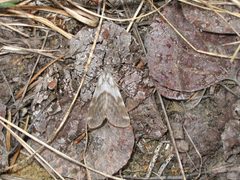
Dodia is a of woolly bear moths erected by Harrison Gray Dyar Jr. in 1901. The genus comprises mid-sized with wingspans around 2.5 cm, characterized by inconspicuous translucent grey-brown coloration without bold markings. inhabit subarctic tundra and taiga across northern Eurasia and North America. Several species have been described since the 1980s, with eight recognized species as of 2009 and potential for further discoveries.
Pronunciation
How to pronounce Dodia: //ˈdoʊ.di.ə//
These audio files are automatically generated. While they are not always 100% accurate, they are a good starting point.
Identification
Distinguished from other Callimorphina by inconspicuous translucent grey-brown coloration without bold markings, resembling larentiine geometer moths (Geometridae). Slender body shape typical of subtribe. Male genitalia, particularly vesica structure, used for -level identification. COI show 2.8–6.8% p-distance between species.
Images
Appearance
Mid-sized with wingspans approximately 2.5 cm. Forewings translucent grey-brown without bold markings, resembling certain larentiine geometer moths (Geometridae) rather than typical Callimorphina. Body slender, typical of subtribe Callimorphina. Flightless females known in some .
Habitat
Subarctic tundra and taiga . Specific microhabitat preferences within these biomes not documented.
Distribution
Northern Eurasia and North America: Russian Altai, Magadan Territory, Eastern Siberia, Khabarovsk Krai (Khingan-Bureya Highlands), Kamchatka, Primorye Territory, Amur Basin, South Siberian mountains, Yukon Territory (Canada), and northern Canada generally.
Behavior
May be active all day but avoids direct sunlight. Flightless females known to occur in some .
Similar Taxa
- Operophterini (Geometridae)Casual resemblance due to slender body and grey-brown coloration; distinguished by -level characters and genitalia structure
- Other CallimorphinaDodia lacks bold coloration and patterning typical of subtribe; more inconspicuous appearance
More Details
Taxonomic history
Long held to contain only two (D. albertae and D. diaphana), but several additional species described since 1980s: D. kononenkoi (1984), D. transbaikalensis (1988), D. sazonovi (1990), D. verticalis (1999/2000), D. maja (2009), D. tarandus (2009). D. zhenya described 2022 from Russian Far East. D. transbaikalensis sometimes synonymized with D. kononenkoi.
Genetic differentiation
distinguished by COI p-distance of 2.8–6.8% and presence of unique COI sites, as demonstrated for D. zhenya.