
Chelis brucei
(Edwards, 1888)
Bruce's tiger moth
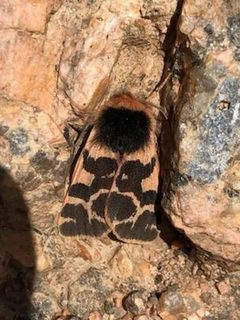
Chelis brucei, commonly known as Bruce's tiger moth, is a of tiger moth in the Erebidae. Described by Henry Edwards in 1888, this is restricted to mountainous regions of western North America. are active during a brief period in mid-summer, while larvae have been documented feeding on a limited set of plants. The species was transferred from the Neoarctia to Chelis as part of a broader taxonomic reorganization of tiger moth genera.
Pronunciation
How to pronounce Chelis brucei: /ˈkɛl.ɪs ˈbruː.si.aɪ/
These audio files are automatically generated. While they are not always 100% accurate, they are a good starting point.
Identification
Distinguished from related tiger moths by its restricted western North American mountain distribution and specific timing (early July to early August). Forewing length of 16–17 mm provides a measurable character. Formerly classified under Neoarctia, now placed in Chelis based on phylogenetic revision. Accurate identification may require examination of genitalia or molecular markers, as visual similarity to other Chelis is likely.
Images
Appearance
Forewing length 16–17 mm. Specific coloration and pattern details not documented in available sources.
Habitat
Montane environments including northern Cascade Mountains, southern British Columbia Coast Range, mountains of Vancouver Island, and Rocky Mountains of Colorado and Wyoming. Specific elevational range not documented.
Distribution
to western North America. Documented from: northern Cascade Mountains (Washington), southern British Columbia Coast Range, Vancouver Island mountains, and Rocky Mountains of Colorado and Wyoming. No records outside this range.
Seasonality
on wing from early July to early August. Larvae recorded in mid-June, indicating earlier seasonal activity for stages.
Diet
Larvae feed on Phacelia sericea (silky phacelia) and Taraxacum officinale (common dandelion). feeding habits unknown.
Host Associations
- Phacelia sericea - larval food plantDocumented larval
- Taraxacum officinale - larval food plantDocumented larval
Life Cycle
Larval stage present in mid-June. occurs by early July, with period extending to early August. timing and stage not documented. Complete duration unknown.
Behavior
No specific behavioral observations documented beyond period and larval feeding records.
Ecological Role
Larval herbivore; contributes to montane as prey for . Specific ecological functions not studied.
Human Relevance
No documented economic or cultural significance. Subject of basic taxonomic and distributional research.
Similar Taxa
- Other Chelis speciesFormerly classified together under Neoarctia; share western North American montane distributions and similar . Require detailed examination for separation.
- General Arctiinae tiger mothsSimilar overall appearance; distinguished by specific geographic range, size, and period.