
Apantesis placentia
(Smith, 1797)
placentia tiger moth
Apantesis placentia, commonly known as the placentia tiger moth, is a of tiger moth in the Erebidae. First described by James Edward Smith in 1797, this species occurs in the southeastern United States. It was formerly classified in the Grammia but was transferred to Apantesis along with related genera. The species produces at least two annually and is associated with sandy, open woodland .
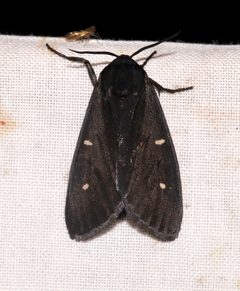
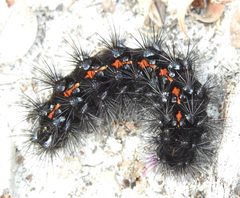
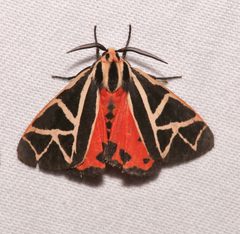
Pronunciation
How to pronounce Apantesis placentia: /əˈpæn.tə.sɪs pləˈsɛn.ʃə/
These audio files are automatically generated. While they are not always 100% accurate, they are a good starting point.
Identification
This can be distinguished from similar tiger moths by its geographic restriction to the southeastern United States coastal plain. Formerly placed in Grammia, species in that complex were reclassified to Apantesis based on morphological and molecular data. Precise identification from requires examination of genitalic characters and pattern details not fully specified in general sources.
Images
Appearance
exhibit the characteristic bold patterning typical of tiger moths, with contrasting markings on the forewings. The specific color pattern details for this are not explicitly documented in available sources, though tiger moths in this generally display warning coloration.
Habitat
Dry, sandy open wooded areas, primarily pine barrens. The is specifically associated with sandy substrates and open conditions characteristic of coastal plain pine barren .
Distribution
Southeastern United States, from New Jersey south to Florida. The range is restricted to the Atlantic coastal plain.
Seasonality
are active from March to October, with at least two per year. The extended period reflects multivoltine in this subtropical to warm-temperate region.
Diet
Larvae feed on Plantago (plantains). feeding habits are not documented.
Host Associations
- Plantago - larval Specific Plantago not identified in sources
Life Cycle
At least two per year. Complete with , larval, pupal, and stages. Detailed developmental duration and stage not specified in available sources.
Behavior
are and attracted to light sources. The is part of the tiger moth that participates in nighttime pollination and serves as prey for nocturnal .
Ecological Role
Larvae function as herbivores on Plantago, potentially influencing plant in sandy open . may serve as prey for bats and other , and as minor .
Human Relevance
No significant direct economic impact documented. The contributes to biodiversity of pine barren , which are themselves of conservation concern due to loss and fire suppression.
Similar Taxa
- Apantesis virgoFormerly in Grammia, similar size and preferences in eastern North America, distinguished by pattern details and genitalic
- Apantesis phalerataOverlapping range and , requires careful examination of forewing pattern and hindwing coloration for separation
- Grammia speciesFormer classification; these were recently separated based on phylogenetic analysis, and some remain difficult to distinguish without dissection
More Details
Taxonomic history
This was originally described as Phalaena placentia by James Edward Smith in 1797. It was subsequently placed in Grammia, then transferred to Apantesis as part of a major generic reclassification of tiger moths that incorporated species from Grammia, Holarctia, and Notarctia into an expanded Apantesis based on molecular and morphological evidence.