
Oposteginae
Meyrick, 1893
Genus Guides
2Oposteginae is a of minute within the Opostegidae, characterized by with distinctive wing venation and larvae that are leaf miners. The subfamily contains the majority of in the family Opostegidae and is distributed across multiple continents. Adults are typically small with narrow wings and reduced mouthparts. The group has been subject to taxonomic revision due to its morphological distinctiveness from related Nepticuloidea.
Pronunciation
How to pronounce Oposteginae: /ˌɒpoʊstɛˈdʒaɪnaɪ/
These audio files are automatically generated. While they are not always 100% accurate, they are a good starting point.
Identification
Distinguished from Nepticulinae by the presence of a long in the forewing and the absence of the characteristic 'nepticulid' wing fold. Differs from other Opostegidae (if recognized) by genitalic and venation characters. may be separated from similar-sized microlepidoptera by the combination of narrow wings, long , and the distinctive resting posture with wings held flat or slightly tented.
Images
Appearance
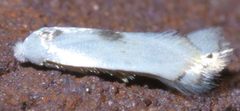
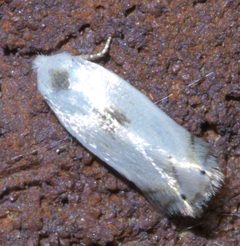
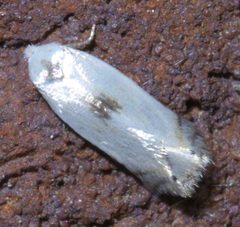
are minute with wingspan usually 4–10 mm. Forewings are narrow, , with a characteristic venation pattern including a long and reduced number of . Hindwings are even narrower, often with a pointed apex. is covered with smooth ; are and relatively long, often exceeding half the forewing length. Body is slender and delicate.
Habitat
Associated with a variety of where plants occur, including deciduous and mixed forests, woodlands, scrubland, and occasionally anthropogenic environments. Specific microhabitat requirements are poorly documented but appear tied to presence of suitable larval host plants.
Distribution
Widespread in the Holarctic region, with records from Europe, Asia, and North America. Also present in parts of the Southern Hemisphere including Australia and New Zealand. Distribution is incompletely known due to small size and undercollecting.
Seasonality
have been recorded from spring through autumn in temperate regions, with peak activity varying by latitude. Many appear to be or , though specific periods are poorly documented for most .
Life Cycle
Larvae are leaf miners, creating blotch or linear mines in leaves of plants. Mining typically occurs in the parenchyma, with deposited in characteristic patterns. occurs outside the mine, often in a silken cocoon on the ground or attached to vegetation. Specific details of placement and pre-pupal are not well documented.
Behavior
are or , with limited activity observed. They are weak fliers, typically staying close to plant stands. Mating has not been described in detail.
Ecological Role
As leaf miners, larvae contribute to nutrient cycling and serve as a food source for and other natural enemies. Their narrow associations may influence local plant , though quantitative impacts are unknown.
Human Relevance
No direct economic importance. Occasionally encountered by lepidopterists conducting microlepidoptera surveys. Some have been used in studies of .
Similar Taxa
- NepticulinaeSimilar minute size and leaf-mining larvae, but distinguished by forewing venation with reduced and different resting posture.
- TischeriidaeAlso contains small leaf-mining , but have different wing shape and venation, and larvae typically make tentiform rather than blotch mines.
More Details
Taxonomic History
Oposteginae has been variously treated as a (Opostegidae) or within Nepticulidae or Opostegidae. Current classification follows molecular phylogenetic studies placing it as sister to Nepticulidae within Nepticuloidea, with family rank for Opostegidae and subfamily rank for Oposteginae.
Collection Challenges
are rarely collected in large numbers due to small size, habits, and lack of attraction to standard light traps. Specialized techniques such as sweeping vegetation at dusk or rearing from leaf mines are more effective.