Stigmella longisacca
Newton & Wilkinson, 1982
Stigmella longisacca is a pygmy in the Nepticulidae, first described in 1982. It is to California, where its larvae are leaf miners on Juglans , particularly Juglans californica. The species has a wingspan of 3.2–4.4 mm and appears to have two to three per year.
Pronunciation
How to pronounce Stigmella longisacca: /stɪɡˈmɛlə lɒŋɡɪˈsækə/
These audio files are automatically generated. While they are not always 100% accurate, they are a good starting point.
Identification
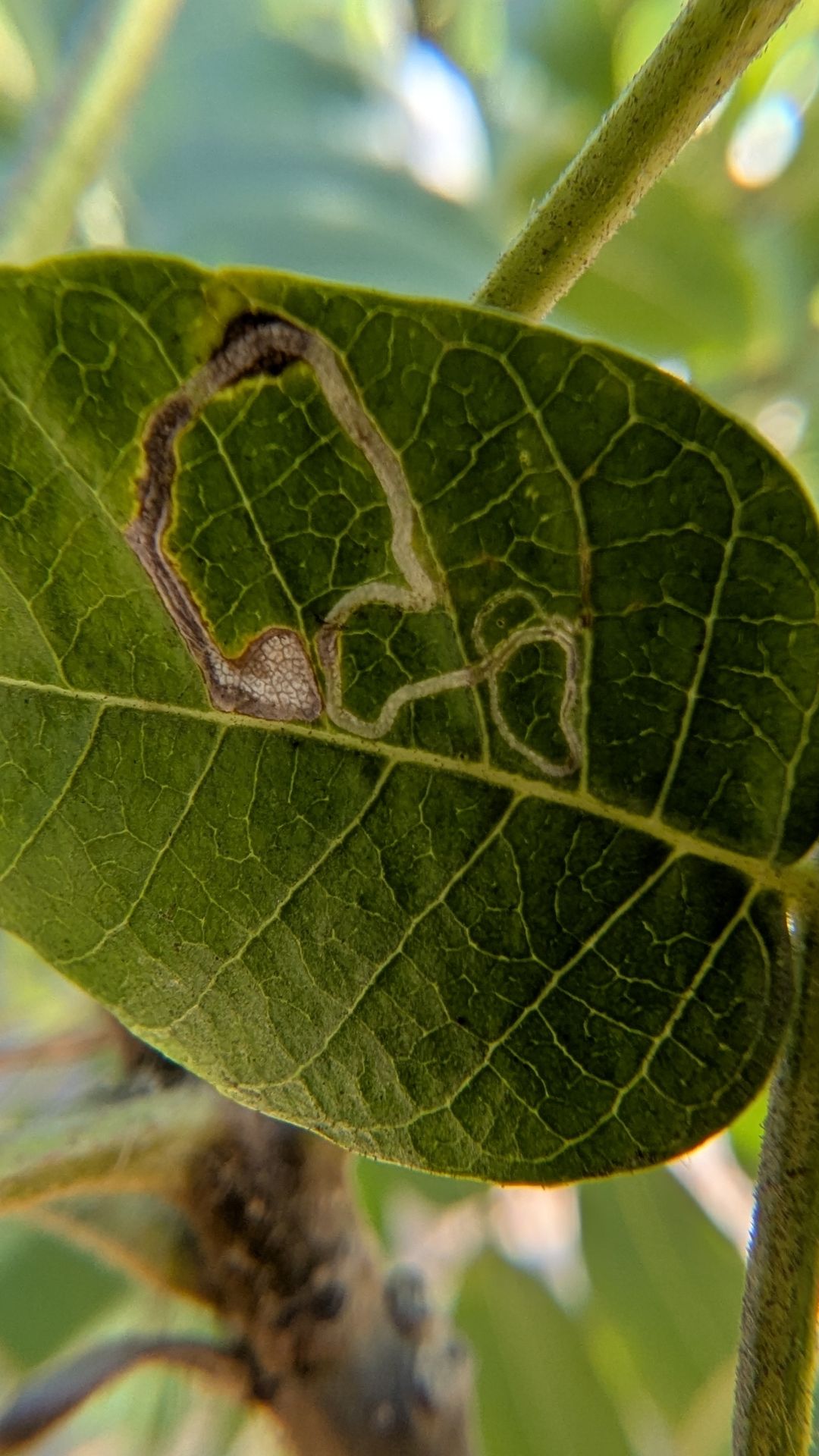
Identification relies on examination of genitalia and larval leaf mine . The is distinguished from other Stigmella by association with its specific plant Juglans californica and its restricted California distribution. Accurate identification requires knowledge of Nepticulidae .
Images
Appearance
are minute with a wingspan of 3.2–4.4 mm. As a member of Nepticulidae, it possesses the characteristic reduced wing venation and forewings typical of pygmy moths. Specific coloration and pattern details of adults are not documented in available sources.
Habitat
Associated with Juglans californica (California black walnut) and other Juglans . The consists of areas where these trees grow, likely including riparian zones, foothill woodlands, and mixed evergreen forests of California.
Distribution
to California, United States. No records from other states or countries have been documented.
Seasonality
Two and possibly three per year have been observed, though specific periods are not documented.
Diet
Larvae feed on Juglans , specifically Juglans californica. They mine the leaves of their plant, creating internal feeding tunnels.
Host Associations
- Juglans californica - primary California black walnut
- Juglans - walnut
Life Cycle
Larvae are leaf miners that feed internally within leaves of Juglans . presumably occurs within the leaf mine or in soil, as is typical for Nepticulidae, though specific details are not documented. have two to three per year.
Behavior
Larvae exhibit leaf-mining , feeding between the upper and lower of leaves. behavior is poorly documented; like other Nepticulidae, they are likely or with weak .
Ecological Role
As a , larvae contribute to herbivore pressure on Juglans . The species is part of the specialized insect associated with California's native walnut trees.
Human Relevance
No documented economic or ecological impact on humans. The is of interest to entomologists studying California's microlepidoptera and leaf-mining fauna.
Similar Taxa
- Other Stigmella speciesMany Stigmella are leaf miners on woody plants; identification requires examination of genitalia and association. S. longisacca is distinguished by its specific association with Juglans californica in California.
- Other Nepticulidae on JuglansOther pygmy may mine Juglans leaves; accurate identification requires taxonomic knowledge and reference to original description.
More Details
Taxonomic history
Described by Newton & Wilkinson in 1982. The specific epithet 'longisacca' presumably refers to characteristics of the male genitalia, though the etymology is not explicitly documented in available sources.
Research status
This has received limited research attention beyond its original description. Most information derives from the original species description and basic faunistic records.