
Fomoria septembrella
(Stainton, 1849) Beirne, 1945
Hypericum Pigmy
Fomoria septembrella is a minute in the Nepticulidae, commonly known as the Hypericum Pigmy. The was originally described as Ectoedemia septembrella by Stainton in 1849 and later transferred to the Fomoria by Beirne in 1945. It is a leaf-mining species associated with Hypericum (St. John's wort) plants. The moth is widely distributed across Europe and extends into the eastern Palearctic and Near East.
Pronunciation
How to pronounce Fomoria septembrella: //foʊˈmɔːr.i.ə sɛpˈtɛmbreɪl.ə//
These audio files are automatically generated. While they are not always 100% accurate, they are a good starting point.
Identification
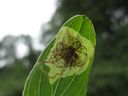
Distinguished from other Fomoria by the silvery fascia on the forewing and the timing of in late summer to autumn (September, as reflected in the specific epithet). Genitalia examination is often required for definitive identification within the . The larval mine on Hypericum leaves—typically a short, contorted gallery that may widen into a blotch—is characteristic, though mine overlaps with some related species.
Images
Appearance
are extremely small with a wingspan of approximately 4–5 mm. The forewings are narrow and , bronzy or golden-brown in color with a distinct silvery fascia. The hindwings are narrow, reduced, and fringed with long hairs, typical of the Nepticulidae. The body is slender and dark. Larvae are minute, pale, and legless, adapted for mining within leaf tissue.
Habitat
Found in where Hypericum grow, including meadows, woodland edges, hedgerows, and disturbed ground. The species tolerates a range of conditions from semi-natural grasslands to anthropogenic habitats such as roadsides and railway embankments.
Distribution
Widespread across most of Europe, from the British Isles and Scandinavia south to the Mediterranean, and eastward through Russia to the eastern . Also recorded in the Near East. Specific confirmed occurrences include Belgium (Antwerp province).
Seasonality
fly in late summer and autumn, primarily in September (giving rise to the name). The period may extend from August to October depending on latitude and local conditions. Larvae are present earlier in the year, mining leaves of the plant.
Diet
Larvae feed as leaf miners within the leaves of Hypericum (St. John's wort), creating internal feeding galleries. The specific range within Hypericum has been reported to include H. perforatum and related species.
Host Associations
- Hypericum - larval plantLeaf-mining larvae feed internally on leaves
- Hypericum perforatum - larval plantConfirmed
Life Cycle
are laid on Hypericum leaves. Larvae mine within the leaf mesophyll, creating initially narrow galleries that may expand. occurs within the mine or in a silken cocoon on the ground. emerge in late summer. The is , with one per year.
Behavior
Larvae are endophagous leaf miners, feeding concealed within leaf tissue. are or and are rarely observed except by rearing from mines or using light traps. They are weak fliers typical of their minute size.
Ecological Role
As a herbivore, the contributes to the natural control of Hypericum . It serves as prey for and other natural enemies. The leaf mines provide microhabitats for other .
Human Relevance
No direct economic importance. Occasionally studied in contexts given its association with Hypericum perforatum, a plant with both medicinal uses and tendencies in some regions. The is of interest to lepidopterists specializing in microlepidoptera.
Similar Taxa
- Fomoria hypericellaAlso feeds on Hypericum; distinguished by (earlier period) and subtle genitalia differences
- Ectoedemia speciesFormerly classified in this ; other Ectoedemia may overlap in use but differ in wing pattern and genitalia
- Other NepticulidaeMany are similarly minute with metallic forewings; require genitalia dissection or plant association for identification
More Details
Taxonomic history
The was originally described by Henry Tibbats Stainton in 1849 as Nepticula septembrella, later placed in Ectoedemia, and transferred to Fomoria by Bryan Patrick Beirne in 1945. The Fomoria was established to accommodate species with distinctive genitalia and associations.
Common name origin
The name 'Hypericum Pigmy' refers to both the minute size of the and its exclusive association with Hypericum plants.