
Enteucha gilvafascia
(Davis, 1978) van Nieukerken, 1986
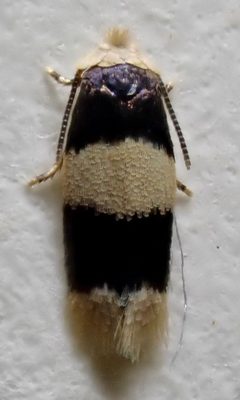
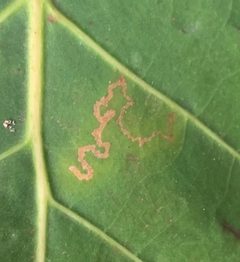
Enteucha gilvafascia is a minute leaf-mining in the Nepticulidae. It is restricted to coastal southern Florida, where it completes two annually. The is entirely dependent on seagrape (Coccoloba uvifera) for larval development, with larvae creating distinctive mines within the leaves.
Pronunciation
How to pronounce Enteucha gilvafascia: //ɛnˈtjuːkə ˌɡɪlvəˈfæsɪə//
These audio files are automatically generated. While they are not always 100% accurate, they are a good starting point.
Identification
Distinguished from other Florida Nepticulidae by association with seagrape plant and specific coastal Florida distribution. The combination of extremely small size (3.1–3.7 mm wingspan), peaking in late spring and winter, and leaf-mine on Coccoloba uvifera provides diagnostic characters. The was originally described as Artaversala gilvafascia before transfer to Enteucha.
Images
Appearance
Minute with wingspan of 3.1–3.7 mm. are among the smallest Lepidoptera. Specific coloration patterns are not described in available sources.
Habitat
Coastal in southern Florida where seagrape (Coccoloba uvifera) occurs. This includes beach dunes, coastal hammocks, and maritime forests. The habitat is characterized by salt-tolerant vegetation and proximity to oceanic shorelines.
Distribution
to coastal southern Florida, United States. Records are restricted to this specific geographic zone within the Neotropical region.
Seasonality
active from April to late June, and again from early October to early January. This bimodal pattern indicates two per year.
Diet
Larvae are monophagous on Coccoloba uvifera (seagrape), mining within the leaves. feeding habits are not documented.
Host Associations
- Coccoloba uvifera - larval plantLarvae mine leaves; sole known
Life Cycle
Two annually. Larval development occurs within leaf mines of seagrape. Specific details of , pupal, and longevity are not documented.
Behavior
Larvae are leaf miners, feeding internally within seagrape leaves rather than externally. This endophagous habit provides protection from and desiccation in the coastal environment.
Ecological Role
As a , the contributes to herbivore diversity on seagrape and participates in nutrient cycling through leaf tissue consumption. Its restricted range and geographic distribution make it a component of localized coastal .
Human Relevance
No documented economic or medical significance. The has potential value as an indicator of intact coastal hammock and undisturbed seagrape .
Similar Taxa
- Other Enteucha speciesShare minute size and leaf-mining habit; distinguished by plant specificity and Florida coastal distribution
- Other Nepticulidae in FloridaSimilar size and ; separated by association with Coccoloba uvifera and phenological pattern
More Details
Taxonomic history
Originally described as Artaversala gilvafascia by Davis in 1978, then transferred to Enteucha by van Nieukerken in 1986. The Artaversala is now synonymized with Enteucha.
Conservation implications
Dependence on coastal seagrape makes this vulnerable to coastal development, beach nourishment projects, and sea level rise affecting Florida's shoreline .