
Sthenopis
Packard, 1865
ghost moths
Species Guides
4- Sthenopis argenteomaculatus(Silver-spotted Ghost Moth)
- Sthenopis pretiosus(Gold-spotted Ghost Moth)
- Sthenopis purpurascens(Four-spotted Ghost Moth)
- Sthenopis thule(Willow Ghost Moth)
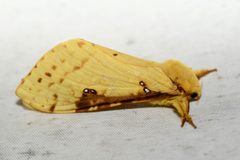
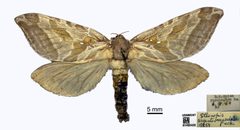
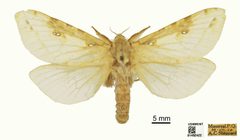
Sthenopis is a of ghost moths in the Hepialidae, containing eight described distributed across North America and China. These are notable for their larvae feeding on woody plants and ferns rather than grasses, unlike many related hepialids. Several species have distinctive metallic spotting patterns referenced in their .
Pronunciation
How to pronounce Sthenopis: //ˌsθɛnəˈpɪs//
These audio files are automatically generated. While they are not always 100% accurate, they are a good starting point.
Identification
Members of this can be distinguished from other Hepialidae by their specific wing patterns and geographic distribution. Sthenopis argenteomaculatus has silver spots, Sthenopis auratus has gold spots, and Sthenopis purpurascens shows purplish coloration. Larvae feed on woody plants (Alnus, Betula, Populus, Salix) or ferns (Athyrium, Dryopteris, Matteuccia), contrasting with grass-feeding relatives.
Images
Habitat
Associated with riparian and wetland where plants grow: willows (Salix), poplars (Populus), birches (Betula), alders (Alnus), and ferns in moist woodland settings.
Distribution
North America (Canada, United States) and China. Specific distributions: S. argenteomaculatus, S. purpurascens, and S. thule in Canada/United States; S. auratus in United States; S. bouvieri, S. dirschi, S. regius, and S. roseus in China.
Diet
Larvae feed on specific plants: Alnus, Betula, Salix (S. argenteomaculatus); Athyrium, Dryopteris, Matteuccia (S. auratus); Populus, Salix (S. purpurascens); Salix exclusively (S. thule). feeding habits unknown.
Host Associations
- Alnus - larval food plantS. argenteomaculatus
- Betula - larval food plantS. argenteomaculatus
- Salix - larval food plantS. argenteomaculatus, S. purpurascens, S. thule
- Athyrium - larval food plantS. auratus
- Dryopteris - larval food plantS. auratus
- Matteuccia - larval food plantS. auratus
- Populus - larval food plantS. purpurascens
Life Cycle
Hepialidae typically have extended larval periods with multiple years spent underground feeding on roots. are short-lived and lack functional mouthparts. Specific details for Sthenopis are not well documented.
Behavior
are or . Larvae are root-feeders, living underground while consuming plant roots.
Ecological Role
Larvae act as root herbivores on woody shrubs, trees, and ferns. Their role in nutrient cycling and is poorly studied.
Human Relevance
S. argenteomaculatus, S. auratus, and S. thule have received reflecting their appearance. No significant economic impact or conservation concern documented.
Similar Taxa
- HepialusRelated ; Sthenopis distinguished by North American/Chinese distribution and woody plant/fern versus grass-feeding habits of many Hepialus
- EndoclitaAsian hepialid ; Sthenopis dirschi and other Chinese overlap in range but differ in associations
More Details
Common names
S. argenteomaculatus: silver-spotted ; S. auratus: gold-spotted ghost moth; S. thule: willow ghost moth
Authorship note
established by Packard in 1865