
Sthenopis pretiosus
(Herrich-Schäffer, [1856])
Gold-spotted Ghost Moth
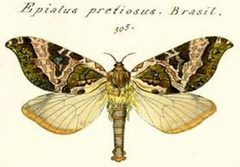
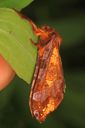
Sthenopis pretiosus is a in the Hepialidae with a transcontinental distribution spanning South and North America. The was described multiple times under different names between 1856 and 1906 before taxonomic revision in 2015 consolidated these into a single species. It is characterized by a wingspan of 60–70 mm and distinctive gold-spotted patterning. The larval stage feeds on ferns in the Athyrium, Dryopteris, and Matteuccia.
Pronunciation
How to pronounce Sthenopis pretiosus: /stɛˈnɒpɪs priːˈʃoʊsəs/
These audio files are automatically generated. While they are not always 100% accurate, they are a good starting point.
Identification
Distinguished from other Sthenopis by the combination of gold-spotted wing pattern and geographic distribution. The 60–70 mm wingspan provides a measurable reference point. Sympatric with other ghost moths in parts of its range; definitive identification may require examination of genitalia or molecular analysis. Previously confused with S. auratus and Phassus eldorado, now synonymized.
Images
Habitat
Associated with fern-rich environments given documented larval plants (Athyrium, Dryopteris, Matteuccia). Specific descriptions for occurrences are not documented, but presence in both tropical (Brazil, Venezuela) and temperate (eastern North America) regions suggests broad ecological .
Distribution
Brazil; Venezuela; eastern United States; south-eastern Canada. The North American range extends through the north-eastern United States and adjacent Canadian provinces. The exhibits a disjunct transcontinental distribution with in both South and North America.
Diet
Larvae feed on ferns: Athyrium, Dryopteris, and Matteuccia. feeding habits are not documented; hepialid adults typically have reduced or non-functional mouthparts and do not feed.
Host Associations
- Athyrium - larval food plantFern used by larvae
- Dryopteris - larval food plantWood fern used by larvae
- Matteuccia - larval food plantOstrich fern used by larvae
Life Cycle
Complete with documented larval stage feeding on fern rhizomes or fronds. Specific details on placement, site, or timing are not documented. As with other Hepialidae, larvae likely live in soil or decaying organic matter and feed on roots or rhizomes.
Ecological Role
Larval herbivore on ferns; contributes to nutrient cycling through root/rhizome feeding. Specific ecological interactions beyond herbivory are not documented.
Human Relevance
No documented economic importance. Subject of taxonomic interest due to its complex nomenclatural history involving multiple independent descriptions across two continents. Occasionally encountered by naturalists and enthusiasts in North America.
Similar Taxa
- Sthenopis argenteomaculatusAnother North American Sthenopis ; distinguished by silver rather than gold spotting pattern and potentially overlapping range
- Phassus spp.Related hepialid in South America; historically confused due to similar and the former placement of S. pretiosus as Phassus eldorado
Misconceptions
The was long treated as three separate entities (Epialus pretiosus, Hepialus auratus/Sthenopis auratus, and Phassus eldorado) due to independent descriptions in different regions. The 2015 revision by Mielke and Grehan demonstrated these represent a single widespread species, with S. pretiosus having priority.
More Details
Taxonomic History
The complex nomenclatural history involves : the original E. pretiosus type has not been located, while the P. eldorado is preserved at the Senckenberg Museum in Frankfurt am Main. The 2015 synonymization represents a significant case study in transcontinental recognition and the application of priority rules.