
Hepialidae
Stephens, [1828]
Ghost moths, Swift moths
Genus Guides
4- Gazoryctra
- Korscheltellus(conifer swift (for K. gracilis))
- Phymatopus(swift moths)
- Sthenopis(ghost moths)
, commonly known as ghost moths or swift moths, comprise approximately 700 in 82 and represent the most diverse of the infraorder . These exhibit numerous ancestral characteristics, including very short , absence of a functional , and homoneurous wing structure with similar forewings and hindwings. Species range dramatically in size from small moths to a record wingspan of 250 mm in Zelotypia. The family shows highest diversity in ancient landmasses, particularly Australia, South Africa, and Chile, reflecting their Gondwanan origins. Many species display pronounced , with males typically smaller but more boldly marked than females.
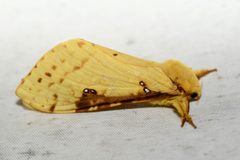
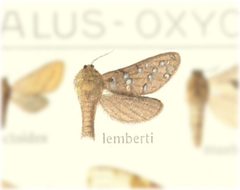
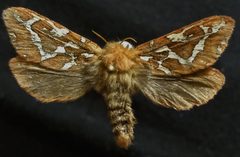
Pronunciation
How to pronounce Hepialidae: /hɛˈpiː.a.lɪˌdeɪ/
These audio files are automatically generated. While they are not always 100% accurate, they are a good starting point.
Identification
can be distinguished from other Lepidoptera by the combination of very short , absence of functional , and homoneurous wing venation (similar forewings and hindwings). Unlike most , they lack a connecting forewings and hindwings. They differ from other by structural details of the male genitalia and specific wing venation patterns; for example, the Elhamma is uniquely diagnosed by having only 2 M- in the hindwing and a strongly cup-shaped juxta in male genitalia. The basal genera Fraus, Gazoryctra, Afrotheora, and Antihepialus are distinguished from Hepialidae sensu stricto by relictual southern Gondwanan distribution and primitive morphological features.
Images
Appearance
exhibit highly variable size, with wingspans ranging from 20 mm to 250 mm. The is roughened in texture. are very short and reduced. The (haustellum) is absent or ; no functional are evident. Labial palpi are small with 2–3 segments; maxillary palpi are minute with 1–5 segments. Wings are homoneurous, with forewings and hindwings similar in venation and shape. Wing maculation is typically dull with light spotting, though some display green or gold iridescent markings. Hindwings tend to be large relative to body size. Females of some high-elevation (Pharmacis, Aoraia) exhibit brachypterous wing reduction.
Habitat
Occurs across diverse environments including temperate and tropical forests, grasslands, and alpine regions. In the Oriental and Neotropical regions, hepialids have diversified extensively in rainforest environments; this pattern is not observed in the Afrotropics. Most have low dispersive powers and are absent from oceanic islands, with limited exceptions (Phassodes on Fiji and Western Samoa, some species in Japan and the Kurile Islands). North American species are found in forested regions where larvae feed on roots or organic matter; notable absence from much of the south-central United States despite ostensibly suitable , possibly due to historical lack of following regression of inland seas.
Distribution
Distributed on ancient landmasses worldwide except Antarctica, with notable absences from Madagascar, the Caribbean islands, and tropical West Africa. Highest diversity in Gondwanan relictual regions: Australia (especially diverse with Fraus), South Africa, and Chile. Present in the Palearctic (Europe, northern Asia), Nearctic (North America), Oriental, and Neotropical regions. The type locality of Eudalaca sanctahelena from St. Helena is considered erroneous, likely representing South Africa instead.
Seasonality
are typically or , with periods varying by and region. Specific timing not documented at level; individual species show defined flight periods (e.g., European species have documented seasonal occurrence).
Diet
Larvae exhibit diverse feeding habits: most feed underground on fine roots, making silk-lined tunnels through soil. Some feed internally in tunnels within stems or trunks of plants. Others feed on leaf litter, fungi, mosses, decaying vegetation, ferns, gymnosperms, and a wide range of monocot and dicot plants. A few (austral 'oxyacanine' ) feed on foliage and drag leaves into feeding tunnels. The South African species Leto venus is restricted to Virgilia capensis, though this may represent ecological monophagy rather than strict host specialization. Little evidence of host-plant specialization across the .
Host Associations
- Virgilia capensis - plantSouth African Leto venus restricted to this tree; possibly ecological monophagy
- Ophiocordyceps sinensis - of larvaeFungus parasitizes hepialid larvae, converting them into sclerotized 'mummies' used in Chinese medicine
Life Cycle
Females broadcast while in , scattering them rather than depositing in specific locations; is extremely high, with up to 29,000 eggs recorded from a single female Trictena. Larvae are maggot-like and concealed, making silken tunnels in substrates. Root-feeding larvae travel through soil in silk-lined tunnels. Before , larvae construct a vertical tunnel up to 10 cm deep with an exit near the ground surface. Pupae can move up and down within the tunnel to adjust to temperature changes and flooding. Prior to , the pupa protrudes halfway out at the ground surface. Pupae possess rows of spines on abdominal segments.
Behavior
are typically or ; a few are diurnally active. Some species form , a that has arisen independently in this . In most , males fly swiftly to locate virgin females that emit calling . In other genera, sex roles are reversed: virgin females assemble upwind to displaying males, which emit pheromones from on the metathoracic tibiae, sometimes accompanied by visual cues. Males of the European ghost swift (Hepialus humuli) are conspicuous when forming leks at dusk, appearing white and ghostly; they sometimes hover singly as if suspended from a thread or fly in figure-eight patterns. Chemical structures of some pheromones have been analyzed.
Ecological Role
Larvae function as root-feeders and decomposers, processing plant material in soil and contributing to nutrient cycling. Some serve as for economically important parasitic fungi (Ophiocordyceps sinensis). A few species are considered agricultural pests of pastures in Australia, New Zealand, and South America (Wiseana, Oncopera, Oxycanus, Fraus, Dalaca).
Human Relevance
Larvae of some are consumed as food: 'witchetty ' include hepialid larvae among cossid and cerambycid beetle larvae, and are important in Aboriginal Australian diet. Hepialid larvae are also eaten in Central and South America. The fungus Ophiocordyceps sinensis, which parasitizes hepialid larvae, produces 'mummies' used extensively in Chinese traditional medicine as a tonic and for treating kidney and lung problems; this fungus commands prices higher than gold and contributes billions of RMB annually to the rural Tibetan Plateau economy. Some species are pasture pests requiring management.
Similar Taxa
- Palaeosetidae (Ogygioses)Also exhibits -forming , but this is considered independently evolved; differ in distribution and morphological details
- Cossidae (wood moths)Larvae of both are consumed as 'witchetty ' and share wood-boring/root-feeding habits, but Cossidae have well-developed and different wing venation
More Details
Phylogenetic significance
represent one of the most basal within Lepidoptera, retaining numerous ancestral characteristics including homoneurous wings and external sperm transfer channel (versus common cloaca in other non-Ditrysian ). Historically described as having 'primitive' wing venation with five-branched in both forewings and hindwings, a pattern reduced in other Lepidoptera. Despite basal phylogenetic position among Microlepidoptera, their often large size and striking appearance has attracted disproportionate popular and taxonomic interest.
Basal versus derived lineages
The Fraus (Australia), Gazoryctra (Holarctic), Afrotheora (Southern Africa), and Antihepialus (Africa) are considered most basal, with approximately 51 showing relictual southern Gondwanan distribution. These are currently separated from sensu stricto, which may form a natural derived group. The most diverse genera are Oxycanus (78 species), Endoclita (78 species), and Thitarodes (80 species).
Sources and further reading
- BugGuide
- Wikipedia
- GBIF taxonomy match
- iNaturalist taxon
- NCBI Taxonomy
- Catalogue of Life
- 'Witchetty Grubs’ Featured at UC Davis Seminar on Oct. 7 | Bug Squad
- Chinese researchers identify insect host species of a famous Tibetan medicinal fungus | Blog
- Ghost Moths (Lepidoptera: Hepialidae)
- Ghost Moths (Lepidoptera: Hepialidae)
- Ghost Moths (Lepidoptera: Hepialidae)
- The Hepialidae: The Ghost Moths
- Primitive Ghost Moths
- A note on ghost moths-family Hepialidae
- Morphological notes on Gazoryctra sciophanes (Ferguson) and G. confusus (Edwards) (Lepidoptera: Hepialoidea: Hepialidae)
- Ghost Moths of Southern South America (Lepidoptera: Hepialidae)
- Studies on the ecology of Oncopera intricata Walker (Lepidoptera: Hepialidae). 1.Fecundity of the female moths.
- Inferences of Korscheltellus gracilis (Lepidoptera: Hepialidae) Habitat Utilization from Sticky Trap Catches on Camels Hump Mountain, Vermont
- Elhamma Walker (Lepidoptera: Hepialidae) revisited: adult morphology, assessment of recently proposed synonyms and descriptions of two species
- Hepialid Moth Diversity in Australia Further Highlighted by Five New Species in the Endemic Genus Abantiades Herrich-Schäffer (Lepidoptera: Hepialidae).