
Parornix
Spuler, 1910
Species Guides
15- Parornix arbutifoliella
- Parornix dubitella
- Parornix geminatella(Unspotted Tentiform Leafminer Moth)
- Parornix inusitatumella
- Parornix kalmiella(Laurel Leafminer)
- Parornix n-sp
- Parornix n-sp-t
- Parornix n-sp-z
- Parornix obliterella
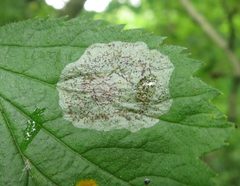
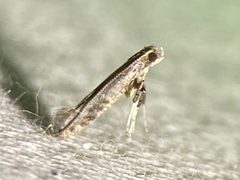
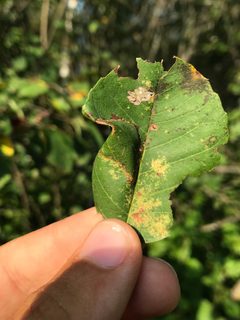
Parornix is a of leaf-mining microlepidopteran in the Gracillariidae. The genus was established by Arnold Spuler in 1910 and is the type genus of the Parornichinae. are known to feed on Rosaceae plants, with larvae creating characteristic mines in leaves. The genus has been recorded across Europe, North America, and Asia.
Pronunciation
How to pronounce Parornix: //pəˈrɔrnɪks//
These audio files are automatically generated. While they are not always 100% accurate, they are a good starting point.
Identification
Parornix are small with feathery wings, a trait referenced in the etymology of the name (from Greek ornis, meaning bird). Accurate species identification typically requires examination of genitalia and ; a Maximum Likelihood tree based on barcodes has been used for species separation within the genus.
Images
Distribution
Recorded from Europe (Denmark, Norway, Sweden), North America (Vermont, United States), and Asia (China, with first report of the in Shandong Province). Additional distributional data exist for P. mixta, P. tenella, P. kugitangi, and the newly described P. altaica.
Host Associations
- Amygdalus davidiana - plantRosaceae; larval for P. sinensis
- Cerasus japonica - plantRosaceae; larval for P. yuliella
Life Cycle
Leaf-mining larvae feed internally within plant leaves, creating characteristic mines. and genitalia of both sexes have been described for some .
Behavior
Larvae are leaf miners, feeding inside leaves of plants rather than externally. This is a defining characteristic of the .
Similar Taxa
- ColeophoraHistorically confused with Parornix; the Ornix (after which Parornix was named) was an early synonym of Coleophora, and both groups include feathery-winged microlepidoptera. Parornix was separated to accommodate the feathery-winged now placed in Gracillariidae.
- OrnixThe name Parornix references Ornix (para = alongside + ornix), as Ornix originally included feathery-winged microlepidoptera in both Coleophoridae and Gracillariidae. Ornix is now restricted in usage and not a current valid genus for these .
More Details
Etymology
The name derives from Greek para (alongside) and ornix, referring to the genus Ornix established by Treitschke in 1833. Ornix itself comes from ornis (bird), describing the feathery-winged appearance of these .
Taxonomic history
The Ornix originally encompassed a wide range of feathery-winged microlepidoptera in both Coleophoridae and Gracillariidae. These were later taxonomically restricted, with the Gracillariidae placed in Parornix.
DNA barcoding
Reference barcodes have been generated for newly described Chinese , and Maximum Likelihood trees based on available barcodes are used to distinguish species within the .
Sources and further reading
- BugGuide
- Wikipedia
- GBIF taxonomy match
- iNaturalist taxon
- NCBI Taxonomy
- Catalogue of Life
- Description of Parornix Altaica sp. n. with New Distributional Data on Parornix Mixta (Triberti), P. Tenella (Rebel) and P Kugitangi Noreika (Lepidoptera, Gracillariidae)
- First report of the leaf-mining genus Parornix Spuler from China, with descriptions of two new species (Lepidoptera, Gracillariidae, Parornichinae)