
Micrurapteryx
Spuler, 1910
Species Guides
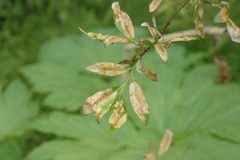
2- Micrurapteryx occulta
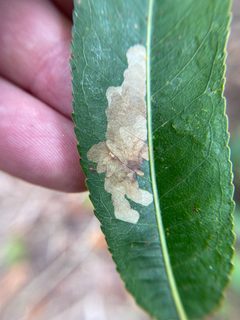
- Micrurapteryx salicifoliella(Willow Leaf Blotch Miner Moth)
Micrurapteryx is a of leaf-mining in the Gracillariidae, first described by Spuler in 1910. The genus contains at least 13 described distributed across the Holarctic region, from North America through Europe to Asia. Species within this genus are characterized by larval stages that create blotch mines in leaves of various plants, primarily in the families Fabaceae and Salicaceae. Several species have been documented as significant herbivores on economically or ecologically important plants, with some achieving pest status due to high densities.
Pronunciation
How to pronounce Micrurapteryx: /ˌmaɪkruːˈræptərɪks/
These audio files are automatically generated. While they are not always 100% accurate, they are a good starting point.
Images
Habitat
occur in diverse including willow-dominated areas, river and lake banks in steppe and forest-steppe zones, and areas supporting their specific plants. Micrurapteryx baranchikovi has been collected from banks of Belyo Lake and Black Lake in the Republic of Khakassia, Russia. Micrurapteryx salicifoliella occurs in willow-dominated habitats in Alaska. Micrurapteryx sophorivora has been found on Robinia pseudoacacia in Turkey.
Distribution
Holarctic distribution including North America (Alaska, Vermont, United States), Europe (Denmark, Norway, Sweden), and Asia (Russia, Kazakhstan, Turkey, Tibet). Specific localities include Republic of Khakassia in southern Siberia, Kuluncak district in Malatya province of Turkey, and Alma-Ata in Kazakhstan.
Diet
Larvae are leaf miners feeding on plant foliage. Documented host plants include Thermopsis lanceolata (Fabaceae) for M. baranchikovi, Robinia pseudoacacia (Fabaceae) for M. sophorivora, and Salix (willow) for M. salicifoliella. Larvae typically feed on epidermal tissue, creating blotch mines.
Host Associations
- Thermopsis lanceolata - plantFabaceae; of M. baranchikovi in Khakassia, Russia
- Robinia pseudoacacia - plantFabaceae; of M. sophorivora in Turkey and Kazakhstan
- Salix - plantwillow ; of M. salicifoliella in Alaska
- Campoplex sp. aff. borealis - Ichneumonidae; larval of M. baranchikovi, first record for Gracillariidae
- Agathis fuscipennis - Braconidae; of M. baranchikovi, first record for Gracillariidae
- Illidops subversor - Braconidae; of M. baranchikovi, first record for Gracillariidae
- Necremnus croton - Eulophidae; most common of M. sophorivora in Turkey, larval ectoparasitoid
- Baryscapus nigroviolaceus - Eulophidae; of M. sophorivora, new record for Turkish fauna
- Cirrospilus pictus - Eulophidae; of M. sophorivora
- Neochrysocharis arvensis - Eulophidae; of M. sophorivora
- Neochrysocharis formosa - Eulophidae; of M. sophorivora
- Pnigalio sp. - Eulophidae; of M. sophorivora
- Pteromalus sp. - Pteromalidae; of M. sophorivora
Life Cycle
Larvae develop as leaf miners, feeding within leaf tissue and creating blotch mines. Larvae of M. sophorivora feed initially on the lower leaf , then move to the upper side at later developmental stages. Pre-pupal larvae exit mines and pupate externally on leaf surfaces or in cocoons attached to leaflets. M. baranchikovi undergoes pupal requiring at approximately +3°C for two months, with following return to warmer conditions. M. salicifoliella is multivoltine with multiple per year in Alaska.
Behavior
Larvae exhibit leaf-mining , creating blotch mines in plant leaves. Larvae change feeding location during development, moving from lower to upper leaf surfaces. Dense have been observed, with M. baranchikovi reaching high densities in Khakassia in 2020. High natural rates by hymenopteran have been documented in field populations.
Ecological Role
Herbivores functioning as leaf miners on native and introduced plants. Serve as hosts for diverse , including ichneumonids, braconids, eulophids, and pteromalids. Some may achieve pest status when densities are high, potentially impacting host plant health.
Human Relevance
Some have potential pest status due to high densities and damage to plants. M. baranchikovi was observed at levels in Khakassia in 2020. Host plants include economically important species such as Robinia pseudoacacia (black locust), a widely planted ornamental and timber tree.
More Details
Species diversity
The currently includes 13 described : M. bidentata, M. caraganella, M. fumosella, M. gerasimovi, M. gradatella, M. kollariella, M. occulta, M. parvula, M. salicifoliella, M. sophorella, M. sophorivora, M. tibetiensis, and M. tortuosella, plus the recently described M. baranchikovi.
DNA barcoding
M. baranchikovi exhibits a distinct BIN (BOLD:AEB4214) with an 8.99% barcoding gap to its nearest relative M. kollariella, supporting its status as a distinct .
Parasitoid records
Multiple have been documented for the first time as associates of Gracillariidae from this : three species from M. baranchikovi (Campoplex sp. aff. borealis, Agathis fuscipennis, Illidops subversor) and seven species from M. sophorivora (all chalcidoids, with Necremnus croton being most common).
Sources and further reading
- BugGuide
- Wikipedia
- GBIF taxonomy match
- iNaturalist taxon
- NCBI Taxonomy
- Catalogue of Life
- Chalcidoid parasitoids of Micrurapteryx sophorivora [Lepidoptera: Gracillariidae] in Kuluncak, Turkey
- Biology of a Willow Leafblotch Miner,Micrurapteryx salicifoliella, (Lepidoptera: Gracillariidae) in Alaska
- A new species of Micrurapteryx (Lepidoptera, Gracillariidae) feeding on Thermopsis lanceolata (Fabaceae) in southern Siberia and its hymenopterous parasitoids
- Systematics and biology of some species of Micrurapteryx Spuler (Lepidoptera, Gracillariidae) from the Holarctic Region, with re-description of M. caraganella (Hering) from Siberia
- Figure 5 from: Kirichenko NI, Akulov EN, Triberti P, Belokobylskij SA (2021) A new species of Micrurapteryx (Lepidoptera, Gracillariidae) feeding on Thermopsis lanceolata (Fabaceae) in southern Siberia and its hymenopterous parasitoids. ZooKeys 1061: 131-163. https://doi.org/10.3897/zookeys.1061.70929
- Supplementary material 3 from: Kirichenko NI, Akulov EN, Triberti P, Belokobylskij SA (2021) A new species of Micrurapteryx (Lepidoptera, Gracillariidae) feeding on Thermopsis lanceolata (Fabaceae) in southern Siberia and its hymenopterous parasitoids. ZooKeys 1061: 131-163. https://doi.org/10.3897/zookeys.1061.70929
- Figure 9 from: Kirichenko NI, Akulov EN, Triberti P, Belokobylskij SA (2021) A new species of Micrurapteryx (Lepidoptera, Gracillariidae) feeding on Thermopsis lanceolata (Fabaceae) in southern Siberia and its hymenopterous parasitoids. ZooKeys 1061: 131-163. https://doi.org/10.3897/zookeys.1061.70929
- Figure 11 from: Kirichenko NI, Akulov EN, Triberti P, Belokobylskij SA (2021) A new species of Micrurapteryx (Lepidoptera, Gracillariidae) feeding on Thermopsis lanceolata (Fabaceae) in southern Siberia and its hymenopterous parasitoids. ZooKeys 1061: 131-163. https://doi.org/10.3897/zookeys.1061.70929
- Figure 6 from: Kirichenko NI, Akulov EN, Triberti P, Belokobylskij SA (2021) A new species of Micrurapteryx (Lepidoptera, Gracillariidae) feeding on Thermopsis lanceolata (Fabaceae) in southern Siberia and its hymenopterous parasitoids. ZooKeys 1061: 131-163. https://doi.org/10.3897/zookeys.1061.70929
- Figure 12 from: Kirichenko NI, Akulov EN, Triberti P, Belokobylskij SA (2021) A new species of Micrurapteryx (Lepidoptera, Gracillariidae) feeding on Thermopsis lanceolata (Fabaceae) in southern Siberia and its hymenopterous parasitoids. ZooKeys 1061: 131-163. https://doi.org/10.3897/zookeys.1061.70929
- Figure 7 from: Kirichenko NI, Akulov EN, Triberti P, Belokobylskij SA (2021) A new species of Micrurapteryx (Lepidoptera, Gracillariidae) feeding on Thermopsis lanceolata (Fabaceae) in southern Siberia and its hymenopterous parasitoids. ZooKeys 1061: 131-163. https://doi.org/10.3897/zookeys.1061.70929
- Supplementary material 2 from: Kirichenko NI, Akulov EN, Triberti P, Belokobylskij SA (2021) A new species of Micrurapteryx (Lepidoptera, Gracillariidae) feeding on Thermopsis lanceolata (Fabaceae) in southern Siberia and its hymenopterous parasitoids. ZooKeys 1061: 131-163. https://doi.org/10.3897/zookeys.1061.70929
- Figures 13–23 from: Kirichenko N, Triberti P, Mutanen M, Magnoux E, Landry J, Lopez-Vaamonde C (2016) Systematics and biology of some species of Micrurapteryx Spuler (Lepidoptera, Gracillariidae) from the Holarctic Region, with re-description of M. caraganella (Hering) from Siberia. ZooKeys 579: 99-156. https://doi.org/10.3897/zookeys.579.7166
- Figures 44–48 from: Kirichenko N, Triberti P, Mutanen M, Magnoux E, Landry J, Lopez-Vaamonde C (2016) Systematics and biology of some species of Micrurapteryx Spuler (Lepidoptera, Gracillariidae) from the Holarctic Region, with re-description of M. caraganella (Hering) from Siberia. ZooKeys 579: 99-156. https://doi.org/10.3897/zookeys.579.7166
- Figures 24–31 from: Kirichenko N, Triberti P, Mutanen M, Magnoux E, Landry J, Lopez-Vaamonde C (2016) Systematics and biology of some species of Micrurapteryx Spuler (Lepidoptera, Gracillariidae) from the Holarctic Region, with re-description of M. caraganella (Hering) from Siberia. ZooKeys 579: 99-156. https://doi.org/10.3897/zookeys.579.7166