
Marmara apocynella
Braun, 1915
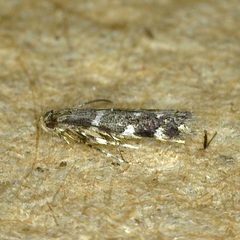
Marmara apocynella is a small in the Gracillariidae. The is known from the eastern and midwestern United States, with records from Ohio, Maine, and Oklahoma. Its larvae are stem miners that feed on Apocynum cannabinum (Indian hemp), creating distinctive long, whitish, serpentine mines.
Pronunciation
How to pronounce Marmara apocynella: /mɑrˈmɑrə ˌæpəˈsaɪnɛlə/
These audio files are automatically generated. While they are not always 100% accurate, they are a good starting point.
Identification
can be distinguished from other Marmara by association with their plant Apocynum cannabinum and the characteristic serpentine stem mines produced by larvae. The mines appear as long, whitish, winding trails on the stems of the host plant. Specific morphological characters for distinguishing adults from are not detailed in available sources.
Images
Habitat
Associated with stands of Apocynum cannabinum, its larval plant. This plant typically grows in open, disturbed including fields, roadsides, and waste areas.
Distribution
United States: Ohio, Maine, and Oklahoma. Records also exist from British Columbia, Canada, though the ' establishment there requires confirmation.
Diet
Larvae feed on Apocynum cannabinum (Apocynaceae). They mine the stems of this plant, creating long, whitish, serpentine mines. feeding habits are unknown.
Host Associations
- Apocynum cannabinum - larval Indian hemp; larvae mine stems
Life Cycle
Larval development occurs within stem mines on Apocynum cannabinum. The mine form is a long, whitish, serpentine trail on the stem. presumably occurs within the mine or nearby, though specific details are not documented.
Behavior
Larvae are endophagous stem miners, feeding internally within plant stems. The serpentine mine pattern suggests larvae move through stem tissue in a winding pattern as they feed and grow.
Ecological Role
As a herbivore, the contributes to the natural herbivore load on Apocynum cannabinum. Its stem-mining habit may affect plant vigor, though -level impacts are unknown. The species represents part of the specialized Lepidoptera fauna associated with Apocynaceae.
Human Relevance
No direct economic or agricultural significance. The is of interest to lepidopterists and researchers studying plant-insect associations. It may serve as an indicator of native Apocynum cannabinum .
Similar Taxa
- Other Marmara species also produce serpentine mines, but typically on different plants. M. apocynella is distinguished by its specific association with Apocynum cannabinum.
- Phyllocnistis speciesRelated gracillariids that produce similar serpentine mines, but usually on leaves rather than stems and on different plants.
More Details
Taxonomic history
Described by Braun in 1915. The is classified in the Phyllocnistinae, tribe Marmarini, a group characterized by serpentine mining larvae.
Collection records
Specimens have been collected in Ohio and Maine, with additional records from Oklahoma and British Columbia. The British Columbia records may represent vagrant individuals or require verification of established .
Sources and further reading
- BugGuide
- Wikipedia
- GBIF taxonomy match
- iNaturalist taxon
- Catalogue of Life
- A Tiny and Beautiful Moth from Texas | Bug Squad
- Uncategorized | Blog - Part 41
- Uncategorized | Blog - Part 18
- New fish species described from the streams of Manyas Lake basin, Turkey | Blog
- A new trout species described from the Alakır Stream in Antalya, Turkey | Blog