
Leucanthiza dircella
Braun, 1914
Leucanthiza dircella is a microlepidopteran in the Gracillariidae. It is the sole known leafminer of Dirca palustris (leatherwood), with larvae forming mines in the leaves of this plant. The species has been documented across northeastern North America and California, with a in northern Michigan. Multiple species in the families Braconidae and Eulophidae attack this .
Pronunciation
How to pronounce Leucanthiza dircella: /luːˈkænθɪzə daɪrˈsɛlə/
These audio files are automatically generated. While they are not always 100% accurate, they are a good starting point.
Identification
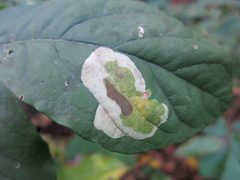
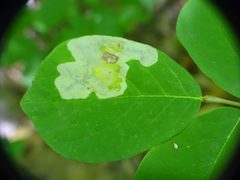
are small in the Gracillariidae, typically with narrow wings and reduced wing venation characteristic of the family. Larval mines on Dirca palustris leaves are distinctive: this is the only known leafmining to use this plant. The mine pattern and host association together provide reliable identification where the host plant is present.
Images
Habitat
Associated with stands of Dirca palustris, a shrub of moist deciduous forests, swamps, and streambanks. The occurs in forested where this plant grows.
Distribution
Canada: Québec, Ontario. United States: California, Kentucky, Maine, Michigan, Ohio, Vermont.
Seasonality
One per year in northern Michigan; timing corresponds with plant .
Diet
Larvae feed by mining the leaves of Dirca palustris (leatherwood).
Host Associations
- Dirca palustris - larval sole known leafmining on this plant
Life Cycle
(one per year) in northern Michigan. Larval stage occurs as leaf miners within Dirca palustris leaves. presumably occurs within the mine or in leaf litter, though specific details are not documented.
Behavior
Larvae are endophagous leaf miners, feeding between the epidermal layers of leaves. are presumably or , as is typical for Gracillariidae.
Ecological Role
Primary consumer of Dirca palustris foliage. Serves as for multiple including Pholetesor, Chrysocharis, Closterocerus, Pnigalio, and Sympiesis.
Similar Taxa
- Other Gracillariidae leafminersMany Gracillariidae are leafminers, but L. dircella is distinguished by its exclusive association with Dirca palustris; other species use different plants or show different mine patterns.
More Details
Parasitoid fauna
Documented include in two : Braconidae (Pholetesor) and Eulophidae (Chrysocharis, Closterocerus, Pnigalio, Sympiesis). This parasitoid load suggests the is a significant for local parasitoid in its range.
Host plant specificity
The exclusive use of Dirca palustris as a larval is notable; this shrub has limited distribution in eastern North America, which may constrain the 's range.