
Cremastobombycia
Braun, 1908
Species Guides
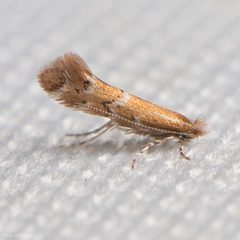
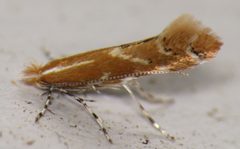
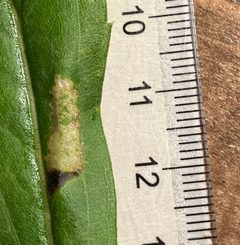
5A of micromoths in the Gracillariidae, Lithocolletinae. are leaf miners primarily associated with Asteraceae plants. The genus was established by Braun in 1908 and includes at least nine described species distributed across the Americas, with recent discoveries extending its range to South American high-elevation Andean . Several species have been investigated for of plants.
Pronunciation
How to pronounce Cremastobombycia: //ˌkrɛ.mə.stoʊ.bɒmˈbɪ.si.ə//
These audio files are automatically generated. While they are not always 100% accurate, they are a good starting point.
Images
Distribution
Documented from North America, Central America, and South America. The was historically known from the United States and Mexico; recent descriptions include from northern Chile at approximately 3400 m elevation in arid highland Andean environments.
Ecological Role
Leaf miners on Asteraceae; at least one congeneric (C. lantanella) has been employed as a agent for camara, suggesting potential utility for other species in weed management programs.
Human Relevance
Investigated for applications against Asteraceae weeds. Cremastobombycia lantanella has been used in biocontrol programs targeting camara.
Similar Taxa
- PhyllonorycterAlso in Lithocolletinae with leaf-mining larvae; Cremastobombycia is distinguished by genitalia including tegumen structure in males and signum shape in females
- MacrosaccusCongeneric leaf miners on Asteraceae; requires examination of male genitalia cornutus structure and female signum for definitive separation
More Details
Species diversity
The includes at least nine described : C. ambrosiaeella, C. grindeliella, C. ignota, C. kipepeo, C. lantanella, C. morogorene, C. solidaginis, C. verbesinella, and C. socoromaensis. Two African species (C. kipepeo, C. morogorene) were described in 2012, and C. socoromaensis represents the first South American record (2024).
Sources and further reading
- BugGuide
- Wikipedia
- GBIF taxonomy match
- iNaturalist taxon
- NCBI Taxonomy
- Catalogue of Life
- Systematics and Biology ofCremastobombycia chromolaenae, New Species (Gracillariidae), a Natural Enemy ofChromolaena odorata(L.) King and H. Robinson (Asteraceae)
- Cremastobombyciasocoromaensis sp. nov., the first South American representative of the micromoth genus Cremastobombycia Braun (Lepidoptera, Gracillariidae, Lithocolletinae).