
Cameraria ulmella
(Chambers, 1871)
Elm Leafminer
A minute leaf-mining in the Gracillariidae, measuring 6.5–7 mm in wingspan. The produces distinctive flat mines on the upper leaf surfaces of oak and elm trees. It exhibits development with distinct seasonal that differ in strategy.
Pronunciation
How to pronounce Cameraria ulmella: /kæməˈrɛriə ʌlˈmɛlə/
These audio files are automatically generated. While they are not always 100% accurate, they are a good starting point.
Identification
Identified by the combination of extremely small size (6.5–7 mm wingspan) and the distinctive flat upper-surface leaf mines on oak (Quercus) and elm (Ulmus) . The mine form and host association help distinguish it from other Cameraria , though microscopic examination of genitalia may be required for definitive identification.
Images
Appearance
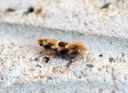
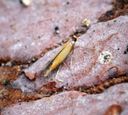
Very small with wingspan of 6.5–7 mm. are not described in detail in available sources.
Habitat
Deciduous forests and woodlands containing trees. Associated with stands of white oak (Quercus alba), bear oak (Q. ilicifolia), northern red oak (Q. rubra), black oak (Q. velutina), and elm (Ulmus americana, U. fulva, U. rubra).
Distribution
Eastern North America: Ontario and Québec in Canada; Texas, Kentucky, Maine, Maryland, Michigan, New York, Georgia, Illinois, and Connecticut in the United States.
Seasonality
with two distinct . Summer brood pupates under flat silken cocoon; later brood enters , changing from green to pale yellow, and overwinters in silk-lined chambers.
Diet
Larval feeding: leaves of Quercus alba, Quercus ilicifolia, Quercus rubra, Quercus velutina, and Ulmus (Ulmus americana, Ulmus fulva, Ulmus rubra). Feeding occurs as internal leaf miners.
Host Associations
- Quercus alba - larval white oak
- Quercus ilicifolia - larval bear oak
- Quercus rubra - larval northern red oak
- Quercus velutina - larval black oak
- Ulmus americana - larval American elm
- Ulmus fulva - larval slippery elm
- Ulmus rubra - larval red elm; synonym of U. fulva in some treatments
Life Cycle
Complete with two annually. Larvae mine leaves of plants. Summer generation pupates under flat silken cocoon on leaf. Later generation larvae turn from green to pale yellow, construct silk-lined chambers, and overwinter in .
Behavior
Larvae are internal leaf miners, creating flat mines on the upper leaf surface. occurs in silken structures; exhibits color change and chamber-construction distinct from the summer brood.
Ecological Role
Herbivore that mines leaves of deciduous tree . Likely serves as prey for and other natural enemies, though specific parasitoid records are not documented in sources.
Human Relevance
Minor economic or aesthetic concern as a on ornamental and forest trees. The "Elm Leafminer" reflects association with elm, though oaks appear to be primary based on recorded feeding.
Similar Taxa
- Other Cameraria speciesMany Cameraria produce similar leaf mines on oaks and related trees; definitive identification requires examination of or genitalia.
- Phyllonorycter speciesRelated gracillariid leaf miners with similar mine forms; distinguished by preferences and mine position (Phyllonorycter often mines lower leaf surface).
Misconceptions
The specific epithet "ulmella" and "Elm Leafminer" suggest primary association with elm, but available records indicate larvae feed on multiple oak (Quercus) as well as elm, with oaks potentially being more significant .
More Details
Mine morphology
The larval mine is described as a flat mine on the upperside of the leaf. This upper-surface positioning distinguishes it from many related leaf miners that occupy lower leaf surfaces.
Overwintering adaptation
The color change from green to pale yellow and construction of silk-lined chambers in the hibernating represents a distinct physiological and behavioral for winter survival.