Caloptilia azaleella
(Brants, 1913)
Azalea Leafminer Moth, azalea leaf miner
Caloptilia azaleella is a small in the Gracillariidae, commonly known as the azalea . Native to Japan, it has been introduced globally through the horticultural trade of azalea plants and is now established in Europe, North America, Australia, and New Zealand. The is a herbivore whose larvae mine and roll leaves of Rhododendron species. It is frequently encountered in gardens, greenhouses, and sheltered urban plantings.
Pronunciation
How to pronounce Caloptilia azaleella: //kæ.ləpˈtɪ.li.ə. əˌzeɪliˈɛlə//
These audio files are automatically generated. While they are not always 100% accurate, they are a good starting point.
Identification
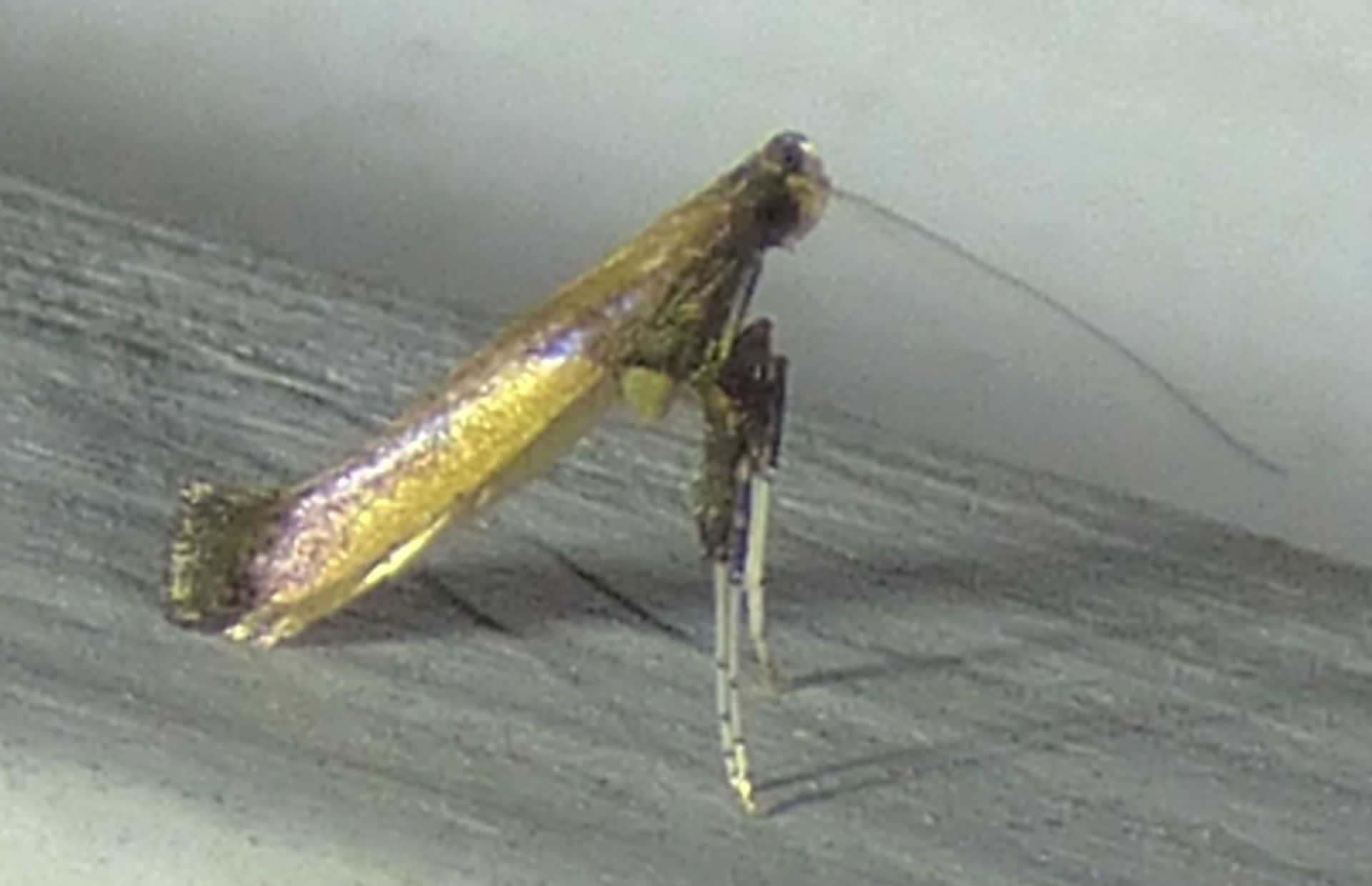
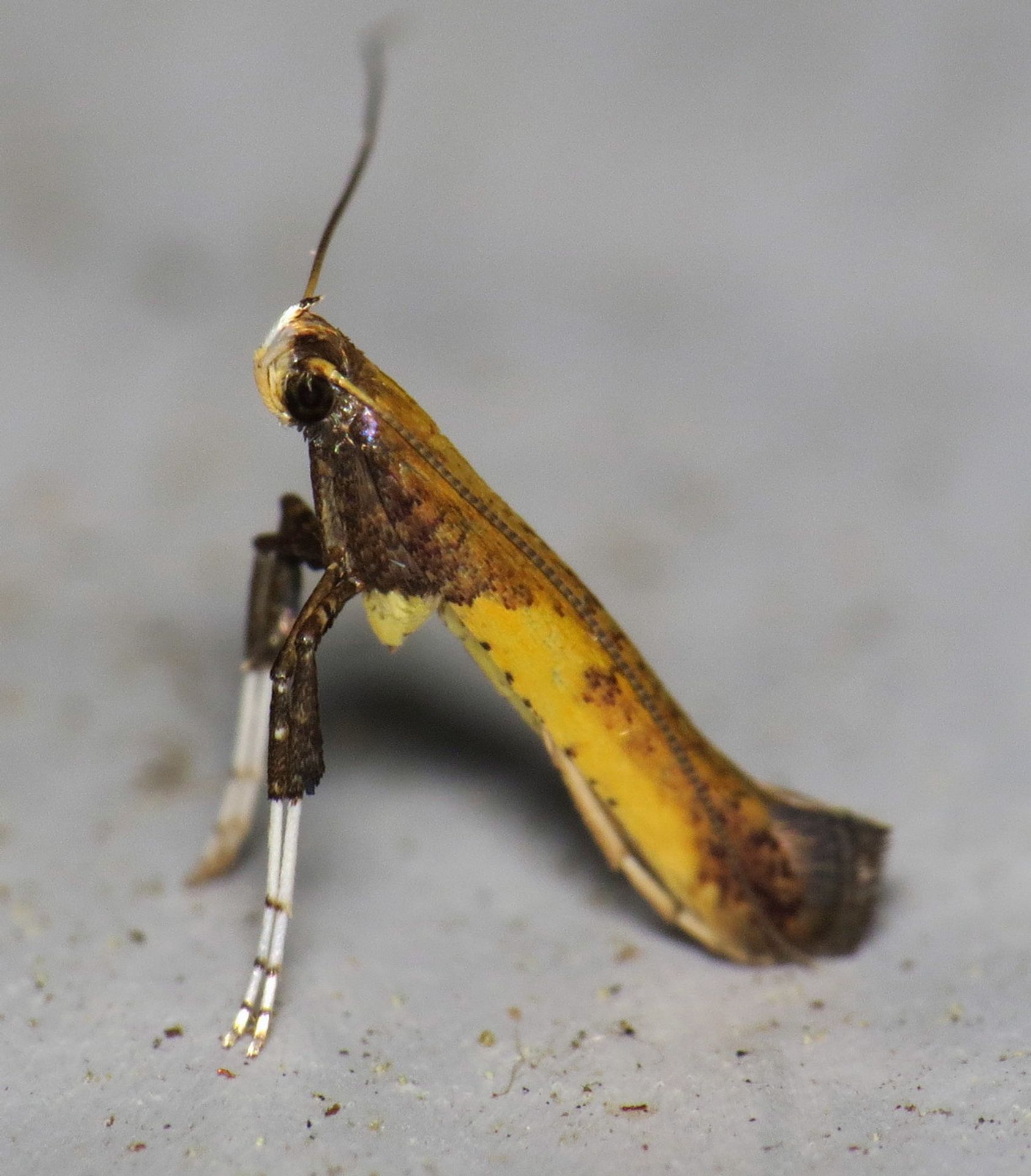
The combination of small size (10–11 mm wingspan), dark brown forewings with a yellow costal band, and association with azalea or rhododendron plants distinguishes this from similar Caloptilia. The leaf-rolling of larvae—forming a distinctive cone by rolling the leaf tip downward—is diagnostic when present. Similar Caloptilia species lack the yellow costal band or occur on different .
Images
Appearance
Small with forewings 10–11 mm in wingspan. Forewings predominantly dark brown with a distinct yellow band running along the costal margin. Body slender, typical of Gracillariidae. Resting posture often with wings held tent-like or flat.
Habitat
Gardens, greenhouses, nurseries, and sheltered urban plantings where Rhododendron are cultivated. In its native range in Japan, occurs in natural and semi-natural with native azaleas. Favors environments with dense azalea plantings and protection from wind.
Distribution
Native to Japan. Introduced and established in: Europe (Netherlands, Belgium, Britain, France, Germany, Italy, Scandinavia, Switzerland, Czechoslovakia), North America (USA: Florida to Texas, north to Long Island, West Virginia, Ohio Valley; California, Washington; Canada: British Columbia, Ontario), Australia (New South Wales, Victoria, Tasmania), and New Zealand. Frequently reported from prominent gardens and greenhouse facilities.
Seasonality
fly from May to October depending on location. In Britain, typically double-brooded with occasional partial third . Multiple per year possible in favorable climates, particularly in greenhouses.
Diet
Larvae feed exclusively on Rhododendron , including cultivated azaleas (Rhododendron indicum and related ). No other plants have been recorded.
Host Associations
- Rhododendron indicum - Primary ; original description from cultivated plants
- Rhododendron spp. - Only recorded; herbivore
Life Cycle
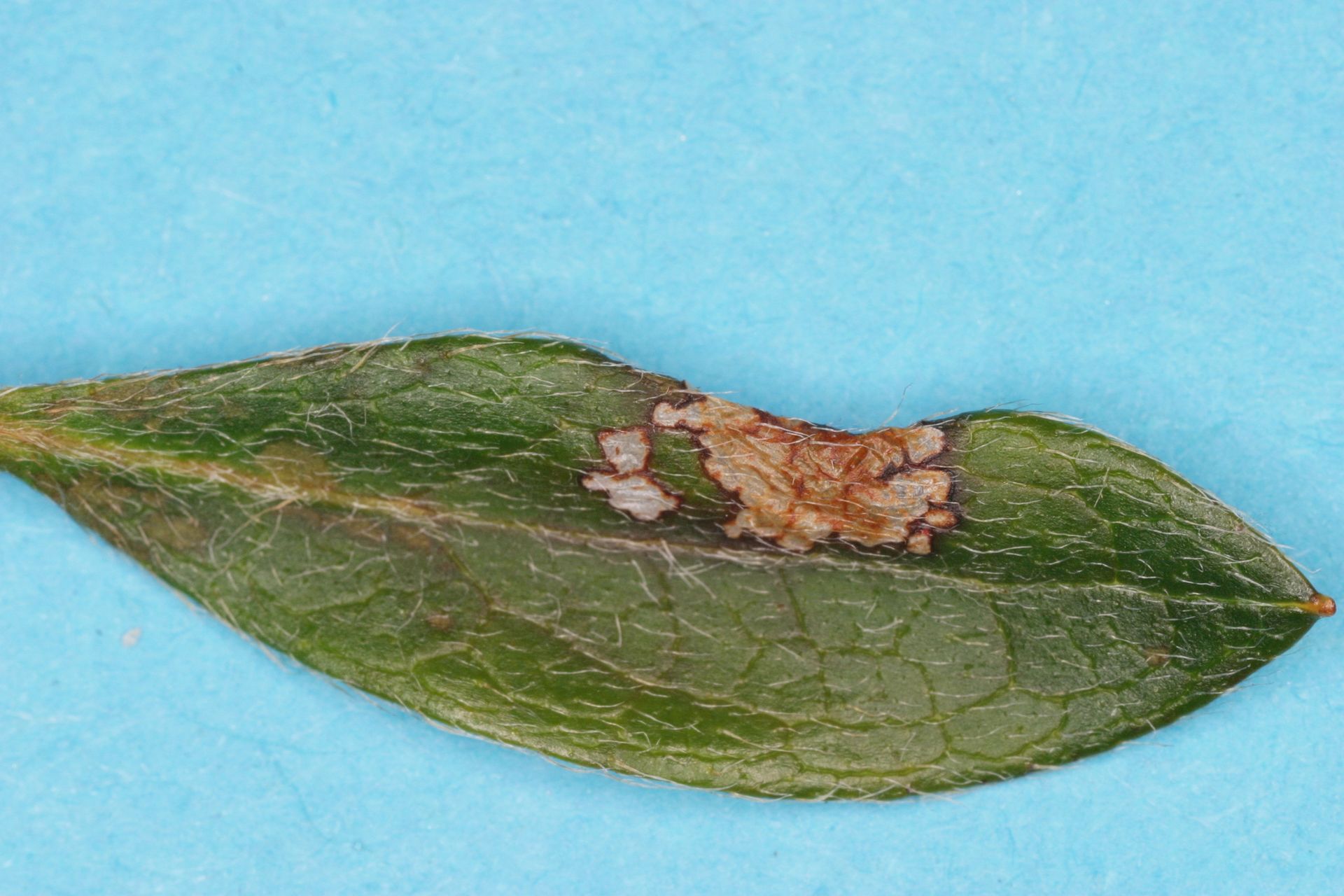
deposited on undersides of leaves near the midrib. Larva initially forms a blotch mine within the leaf, then rolls the leaf downward from the tip to form a protective cone. occurs in a pale brown, membranous silken cocoon spun beneath a leaf. approximately one week after pupation. Multiple per year in suitable conditions.
Behavior
; attracted to light. Larvae are leaf miners in early instars, then transition to leaf-rolling , constructing a conical shelter by rolling the leaf tip downward. This shelter provides protection during feeding and .
Ecological Role
herbivore on Rhododendron. largely dependent on plant availability and practices. No documented native or in introduced ranges; natural enemies in native Japanese range not well studied.
Human Relevance
Recognized as a minor pest of ornamental azaleas and rhododendrons in gardens and nurseries. Leaf mining and rolling damage is primarily cosmetic, rarely causing serious plant mortality. Presence often noted in prestigious collections (Buckingham Palace, Kew Gardens, RHS Wisley). Introduction history illustrates risks of international plant trade for spreading specialized insects.
Similar Taxa
- Caloptilia blandellaSimilar size and leaf-mining habit, but occurs on walnut (Juglans) rather than Rhododendron; forewing pattern differs
- Other Caloptilia speciesMany Caloptilia are leaf miners with similar ; plant association and yellow costal band distinguish C. azaleella
More Details
Introduction history
First described in 1913 from specimens reared in the Netherlands on imported Japanese azalea plants, making it one of the earliest documented cases of an insect introduced via international horticultural trade.
Greenhouse populations
Widely reported from greenhouse environments, where year-round breeding is possible; this has likely facilitated spread to outdoor in temperate regions.