
Leucospilapteryx venustella
(Clemens, 1860)
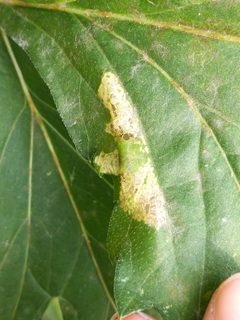
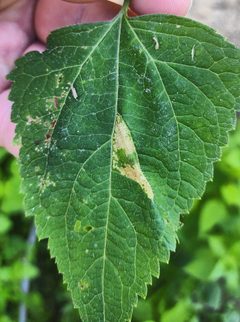
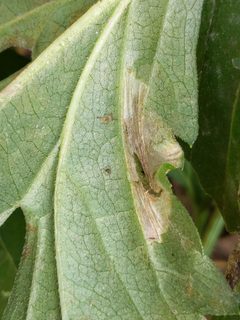
A small leaf-mining in the Gracillariidae with a wingspan of approximately 6 mm. The is known from eastern North America, ranging from Québec through the Atlantic states and into the Midwest. Larvae develop as leaf miners on plants in the Ageratina and Eupatorium urticifolium.
Pronunciation
How to pronounce Leucospilapteryx venustella: //ˌljuːkoʊspaɪˈlæptərɪks vəˌnʌˈstɛlə//
These audio files are automatically generated. While they are not always 100% accurate, they are a good starting point.
Identification
The combination of extremely small size (6 mm wingspan), eastern North American distribution, and association with Ageratina and Eupatorium plants distinguishes this . Similar small gracillariid in the region require dissection or molecular analysis for definitive identification.
Images
Appearance
Very small with wingspan of about 6 mm. As a member of Gracillariidae, likely have narrow, wings typical of the , though specific coloration and pattern details are not documented in available sources.
Habitat
Areas where plants Ageratina ageratoides, Ageratina altissima, and Eupatorium urticifolium occur. These are typically woodland edges, moist meadows, and disturbed in eastern deciduous forest regions.
Distribution
Canada: Québec, Ontario. United States: Atlantic coastal states, Maine, Vermont, Maryland, Pennsylvania, Ohio, Michigan, Kentucky, Missouri.
Diet
Larvae feed on leaves of Ageratina ageratoides, Ageratina altissima, and Eupatorium urticifolium. feeding habits are not documented.
Host Associations
- Ageratina ageratoides - larval plant
- Ageratina altissima - larval plant
- Eupatorium urticifolium - larval plant
Life Cycle
Larvae are leaf miners, feeding internally within plant leaves. Specific details of , timing, and number of per year are not documented.
Behavior
Larvae create leaf mines in plant foliage. are presumably or , as is typical for Gracillariidae, though specific adult has not been described.
Ecological Role
As a , larvae may influence plant physiology and serve as prey for and other natural enemies. impacts on host plants are likely minimal given the specialized nature of the interaction.
Human Relevance
No documented economic or medical significance. Occasionally encountered by botanists and entomologists studying eastern North American flora and fauna.
Similar Taxa
- Other Gracillariidae speciesMany small gracillariid overlap in size and general appearance; accurate identification requires examination of genitalia or plant association
- Other leaf-mining LepidopteraSimilar leaf mining damage can be produced by in such as Nepticulidae and Bucculatricidae; larval and specificity distinguish them