
Scopula siccata
McDunnough, 1939
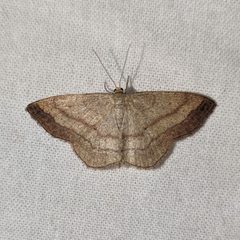
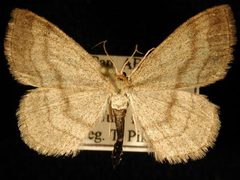
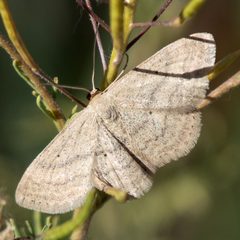
Scopula siccata is a of geometrid first described by James Halliday McDunnough in 1939. It occurs in mountainous regions of western North America, inhabiting dry slopes at moderate to high elevations. The species has a relatively restricted distribution spanning from northern Colorado northward through Wyoming, western Montana, and Idaho to southern British Columbia and southwestern Alberta. have a wingspan of 23–24 mm. Like other members of the Scopula, the larvae are likely inchworm-type caterpillars, though specific plant associations remain undocumented.
Pronunciation
How to pronounce Scopula siccata: /ˈskɒpjʊlə sɪkˈkɑːtə/
These audio files are automatically generated. While they are not always 100% accurate, they are a good starting point.
Identification
Scopula siccata can be distinguished from similar Scopula by its geographic distribution and preference. It occurs in dry, mountainous areas of the northern Rocky Mountain region, whereas most in North America are found at lower elevations or in different geographic regions. The small wingspan (23–24 mm) and association with dry montane slopes help separate it from larger or more mesic-habitat Scopula species. Specific wing pattern details are not well documented in the literature, making definitive field identification challenging without reference specimens. Genital dissection may be required for certain identification where sympatric with similar species.
Images
Habitat
Dry slopes in mountainous areas, typically at moderate to high elevations in the northern Rocky Mountain region. The is characterized by xeric conditions with sparse vegetation cover on rocky or well-drained substrates.
Distribution
North America: northern Colorado north through Wyoming, western Montana and Idaho to southern British Columbia and southwestern Alberta. The distribution is restricted to the northern Rocky Mountains and adjacent mountain ranges.
Seasonality
period not explicitly documented; likely active during summer months (June–August) based on elevation and latitude, though specific records are lacking.
Ecological Role
As a herbivorous larva, likely contributes to nutrient cycling in montane through leaf consumption. may serve as of low-growing montane flora and as prey for insectivorous birds, bats, and other . Specific ecological interactions remain undocumented.
Human Relevance
No documented economic or cultural significance. The is of potential interest to lepidopterists and ecologists studying montane insect biodiversity. Like many geometrid moths, it is not known to be a pest of agricultural or forestry significance.
Similar Taxa
- Scopula limboundataSimilar size and wing pattern, but occurs in eastern North America in deciduous forest rather than western montane dry slopes
- Scopula marginepunctataEuropean with somewhat similar appearance, but distribution prevents confusion
- Other Scopula species in western North AmericaNumerous occur in the western U.S. and Canada; precise identification often requires examination of genitalia and reference to
More Details
Taxonomic history
First described by Canadian lepidopterist James Halliday McDunnough in 1939. The specific epithet 'siccata' (Latin for 'dried' or 'parched') presumably refers to the dry conditions where the occurs.
Conservation status
No formal conservation assessment has been conducted. The restricted montane distribution and potential vulnerability to climate change effects on high-elevation may warrant monitoring, though the is not currently considered at risk.