
Scopula compensata
Walker, 1861
small frosted wave, Dark-marked Wave
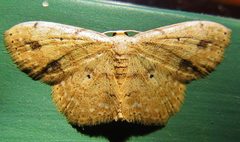
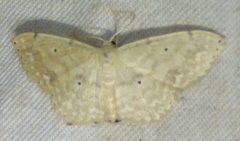
Scopula compensata is a small geometrid of the Geometridae, described by Francis Walker in 1861. The is known by two : 'small frosted wave' (traditional) and 'Dark-marked Wave' (preferred on iNaturalist). It is restricted to the southeastern United States, with confirmed records from Alabama, Florida, Georgia, and South Carolina. The wingspan is approximately 15 mm. Like other members of the Scopula, the larvae are inchworm-type caterpillars that feed on various plants.
Pronunciation
How to pronounce Scopula compensata: /ˈskoʊpjʊlə kɒmpɛnˈseɪtə/
These audio files are automatically generated. While they are not always 100% accurate, they are a good starting point.
Identification
The small size (15 mm wingspan) and southeastern U.S. distribution help distinguish Scopula compensata from similar Scopula . The 'frosted' or pale appearance with dark markings separates it from darker . Accurate identification requires examination of genitalia or , as many Scopula species are externally similar. The species is one of several Scopula found in eastern North America, including the widespread S. limboundata (large lace-border ) which is larger and occurs across much of North America east of the Rockies.
Images
Appearance
A small geometrid with wingspan of approximately 15 mm. As a member of the Scopula, likely exhibit the characteristic wave-patterned forewings typical of the group. The 'small frosted wave' suggests pale or frosted coloration with wavy transverse lines. The 'Dark-marked Wave' common name indicates darker markings on a lighter background. Specific coloration details beyond these general patterns are not documented in available sources.
Habitat
Occurs in typical of the southeastern United States where plants for larval development are present. Specific habitat associations are not documented, but related Scopula occupy diverse environments from forests to grasslands and gardens.
Distribution
to southeastern North America. Confirmed records from Alabama, Florida, Georgia, and South Carolina. The GBIF distribution record indicates presence in North America generally, but the specific range is restricted to the southeastern coastal plain and adjacent regions.
Life Cycle
Complete with , larva, pupa, and stages. As a geometrid, the larva is an 'inchworm' or 'looper' with reduced , moving by arching its body. Larval plants are not documented for this . Related Scopula species feed on a variety of herbaceous plants and shrubs.
Behavior
are and attracted to light. Like other geometrid moths, adults rest with wings spread flat or slightly folded. Larvae exhibit characteristic looping locomotion due to reduced number of .
Ecological Role
Larvae function as herbivores, consuming plant foliage. may serve as when feeding on nectar. Both life stages provide food for various including birds, bats, and insectivorous insects.
Human Relevance
A subject of citizen science observation, with 1,277 observations recorded on iNaturalist as of the data retrieval date. Not known to be of economic importance. The contributes to biodiversity documentation and monitoring efforts in the southeastern United States.
Similar Taxa
- Scopula limboundataLarger (hence 'large lace-border ') with similar appearance but broader distribution across eastern North America; distinguished by size and more northern/western range
- Other Scopula speciesMany Scopula are externally similar and require genital dissection or molecular methods for reliable identification; S. compensata distinguished by small size and southeastern distribution
More Details
Taxonomic history
Described by Francis Walker in 1861, a prolific British entomologist who described thousands of , many from specimens collected in North America and other regions. The specific epithet 'compensata' is Latin, possibly referring to some compensatory or balancing feature of the wing pattern.
Observation record
With 1,277 iNaturalist observations, this is relatively well-documented photographically, though many observations may await expert verification given the difficulty of identifying Scopula species from images alone.