
Scopula ancellata
(Hulst, 1887)
angled wave moth, pointed-winged wave
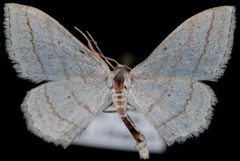
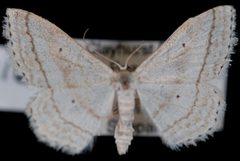
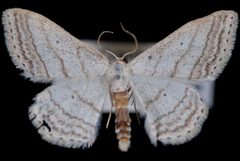
Scopula ancellata is a geometrid first described by George Duryea Hulst in 1887. It is found across much of North America, from Quebec west to the Northwest Territories and British Columbia, and south to Michigan, Indiana, and Arizona. The species inhabits mixed wood and coniferous forests. are small moths with a wingspan of approximately 23 mm. The larvae have been recorded feeding on Melilotus alba and Alnus tenuifolia.
Pronunciation
How to pronounce Scopula ancellata: /ˈskɒpjʊlə ænˈsɛlətə/
These audio files are automatically generated. While they are not always 100% accurate, they are a good starting point.
Identification
Distinguished from similar Scopula by wing shape characteristics implied by the 'angled wave' and 'pointed-winged wave.' Specific diagnostic features for separating from not detailed in available sources. As with many geometrid moths, definitive identification may require examination of genitalia or reference to regional faunal treatments.
Images
Appearance
Small with wingspan approximately 23 mm. Wing pattern and coloration typical of wave moths in the Scopula, with characteristic wavy transverse lines. The specific epithet 'ancellata' and 'angled wave' suggest distinctive angular or pointed wing margins. Detailed description of coloration and pattern elements not available in provided sources.
Habitat
Mixed wood and coniferous forests. Specific microhabitat preferences within these forest types not documented.
Distribution
North America: Quebec west to Northwest Territories and British Columbia; south to Michigan, Indiana, and Arizona. Canadian provincial records include Alberta, Manitoba, and Saskatchewan.
Seasonality
period not explicitly documented in available sources. As a northern and montane , likely active during warmer months, with timing varying by latitude and elevation.
Diet
Larvae feed on Melilotus alba (white sweetclover) and Alnus tenuifolia (thinleaf alder). feeding habits not documented.
Host Associations
- Melilotus alba - larval food plantWhite sweetclover, a leguminous herb
- Alnus tenuifolia - larval food plantThinleaf alder, a deciduous shrub or small tree in the birch
Life Cycle
Complete with , larva, pupa, and stages. Larvae are typical geometrid 'inchworms' or 'loopers' with reduced , moving with characteristic looping gait. Specific details on number of instars, stage, or site not documented.
Behavior
Larval locomotion uses characteristic 'looping' movement typical of geometrid caterpillars, with only two or three pairs of at the end causing the body to arch in movement. including period, mating, and oviposition not documented.
Ecological Role
Larvae function as herbivores on their plants. Specific ecological interactions or services not documented. As with most Lepidoptera, likely serves as prey for various and .
Human Relevance
No documented economic importance. Not known to be a pest of agricultural or forestry significance. May be encountered by naturalists and enthusiasts in its forest .
Similar Taxa
- Scopula limboundataLarge lace-border moth, another Scopula with similar size and preferences in eastern North America; distinguished by wing pattern details
- Other Scopula speciesNumerous in North America with similar 'wave' wing patterns; precise identification often requires detailed examination