
Epirrhoe alternata
(Müller, 1764)
Common Carpet Moth, White-banded Toothed Carpet
A small to medium-sized geometrid with distinctive banded wing patterns. The exhibits broad geographic distribution across the Palearctic, Near East, and North America. are active primarily in spring and early summer. The species is well-documented with over 27,000 observations on iNaturalist, indicating it is frequently encountered and relatively conspicuous.
Pronunciation
How to pronounce Epirrhoe alternata: /ɛˈpɪrhoʊ iː ˌɔːltərˈneɪtə/
These audio files are automatically generated. While they are not always 100% accurate, they are a good starting point.
Identification
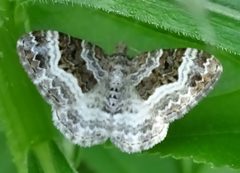
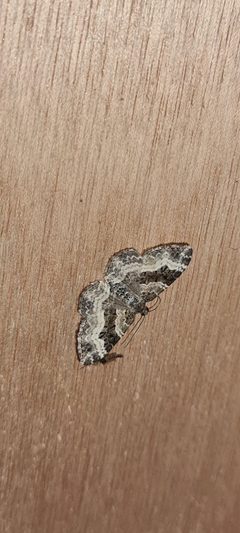
Distinguished from similar carpet moths (Epirrhoe and related ) by the combination of: (1) prominent white or pale band on forewings, (2) toothed wing margins, and (3) relatively broad dark band to the pale band. Epirrhoe rivata typically shows more uniform gray coloration with less contrasting banding. Xanthorhoe often have more orange or reddish tones and different band arrangement. Examination of genitalia may be required for definitive identification of worn specimens.
Images
Appearance
Wings display alternating light and dark transverse bands, typically with a prominent white or pale band crossing the forewings. Wing margins are toothed or scalloped. Forewing length approximately 12-16 mm. Body relatively slender with muted gray-brown ground coloration. Pattern provides cryptic camouflage against lichen-covered bark.
Habitat
Found in diverse environments including deciduous and mixed woodlands, hedgerows, scrubland, gardens, and parklands. Associated with areas supporting the larval plants. Occurs from lowlands to moderate elevations. In North America, particularly common in northern forested regions.
Distribution
Palearctic region throughout Europe and northern Asia (excluding China). Near East. North America: across the northern tier of the United States and all Canadian provinces and territories. Absent from southern United States and most of Mexico.
Seasonality
active primarily April through July in temperate regions, with peak activity in May and June. Single-brooded () in northern parts of range; possible partial second in southern areas with favorable conditions.
Diet
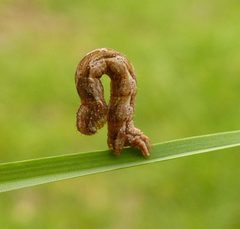
Larvae feed on bedstraws (Galium , Rubiaceae). Specific feeding records include cleavers (G. aparine) and other Galium species.
Host Associations
- Galium - larval food plantprimary
Life Cycle
stage duration unknown. Larvae present summer through autumn, as pupae in soil or leaf litter. emerge in spring. Complete development from egg to adult spans approximately one year in temperate climates.
Behavior
are and attracted to light. Rest with wings held flat or slightly tented over body. period relatively brief, concentrated in spring months. Larvae are ground-dwelling or low-herb feeders, active at night.
Ecological Role
Larval herbivore on native and introduced Galium . Serves as prey for various including birds, bats, and predatory arthropods. contribute to pollination to a limited degree.
Human Relevance
Occasionally encountered in gardens where bedstraws grow; not considered a pest. Of interest to enthusiasts and naturalists due to its distinctive appearance and wide distribution. Frequently photographed and documented by citizen scientists.
Similar Taxa
- Epirrhoe rivataSimilar size and wing shape, but typically lacks the prominent contrasting pale band; more uniform gray coloration
- Xanthorhoe montanataOverlapping and similar carpet moth appearance, but shows orange or reddish central band rather than white
- Xanthorhoe fluctuataComparable wing pattern geometry, but ground coloration includes more brown and orange tones; banding pattern differs in relative width and position
More Details
Taxonomic history
Originally described as Phalaena alternata by Müller in 1764. Transferred to Epirrhoe following revision of geometrid classification. The genus name derives from Greek 'epi-' (upon) and 'rrhoe' (flow), possibly alluding to wing pattern or early taxonomic associations.
Observation frequency
With over 27,000 iNaturalist observations, this is among the most frequently documented geometrid moths in its range, reflecting both its abundance and its relatively conspicuous wing pattern that facilitates identification.