
Epirrhoe
Hübner, [1825]
Species Guides
4- Epirrhoe alternata(Common Carpet Moth)
- Epirrhoe medeifascia
- Epirrhoe plebeculata(Orange-winged Carpet)
- Epirrhoe sperryi(Sperry's Argent & Sable)
Epirrhoe is a of in the Geometridae, Larentiinae, containing approximately 17 described distributed across the Holarctic region. The genus was established by Jacob Hübner in 1825. Species within this genus are generally small to medium-sized geometrid moths, many with characteristic wing patterns featuring contrasting dark and light markings. The Small Argent and Sable (Epirrhoe tristata) is among the better-known species, with a published chromosomally complete assembly.
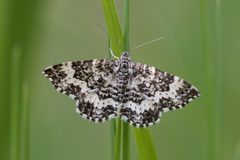
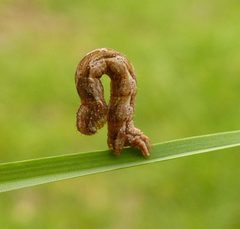
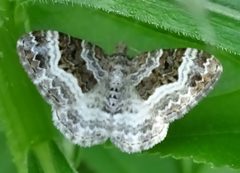
Pronunciation
How to pronounce Epirrhoe: /eˈpir.o.e/
These audio files are automatically generated. While they are not always 100% accurate, they are a good starting point.
Images
Distribution
Records from Denmark, Norway, Sweden, the United States (Vermont), and the United Kingdom (Scotland). The appears to have a primarily Holarctic distribution.
Human Relevance
Epirrhoe tristata (Small Argent and Sable) has been subject to sequencing research, with a complete chromosomal assembly published as part of the Darwin Tree of Life project. This provides a genomic resource for lepidopteran evolutionary and developmental studies.
More Details
Species diversity
The includes 17 described : E. alternata, E. dubiosata, E. fulminata, E. galiata, E. hastulata, E. latevittata, E. medeifascia, E. molluginata, E. plebeculata, E. pupillata, E. rivata, E. sandosaria, E. sperryi, E. supergressa, E. tartuensis, E. timozzaria, and E. tristata.
Genomic resources
Epirrhoe tristata assembly: 313.80 Mb, 30 chromosomal pseudomolecules (29 + Z ), 16,469 protein-coding genes. Specimen collected from Glen Strathfarrar, Scotland, UK (57.41°N, 4.73°W).