
Disclisioprocta
Wallengren, 1861
Species Guides
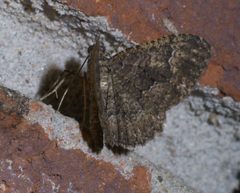
1- Disclisioprocta stellata(somber carpet)
Disclisioprocta is a of geometrid moths in the Larentiinae, established by Wallengren in 1861. The genus contains at least three : D. stellata (type species), D. natalata, and D. edmondsii (transferred from Xanthorhoe in 2023). Species are characterized by distinctive male and female genitalia , including bifid uncus, costal sclerotised band, stout sacculus projection, and plate-like cornutus. Molecular phylogenetic analysis supports the monophyly of the genus, though genetic distances between species are higher than typical for congenerics, suggesting possible undescribed diversity.


Pronunciation
How to pronounce Disclisioprocta: /dɪsˌklɪziˈɒprəktə/
These audio files are automatically generated. While they are not always 100% accurate, they are a good starting point.
Identification
Distinguished from related (particularly Xanthorhoe) by genitalia characters: bifid uncus, costal sclerotised band not reaching cucullus apex, stout sacculus projection, and plate-like cornutus in males; flattened elongated antrum with spine-like signa cluster in females. Wing patterns and external alone are insufficient for reliable identification; dissection and examination of genitalia or (COI) is required for definitive determination.
Images
Habitat
Arid and semi-arid valleys in South America; known from Azapa Valley in northern Chile at elevations around 800-1000 m. Associated with natural and semi-natural environments where plants occur.
Distribution
South America: Chile (Arica Province, Azapa Valley), Argentina. Disclisioprocta edmondsii has been confirmed from northern Chile; historical records suggest broader distribution in southern South America.
Seasonality
active in February, May, and September in northern Chile. Larvae collected in January, with adults emerging the following month. Activity patterns likely vary with latitude and elevation.
Diet
Larvae feed on Bougainvillea glabra (Nyctaginaceae); feeding habits unknown.
Host Associations
- Bougainvillea glabra - larval plantReared from larvae collected on ornamental plant in natural environment; only confirmed association for the
Life Cycle
Complete with , larva, pupa, and stages. Larval period observed in January; and adult in February. Duration of other stages unknown.
Behavior
attracted to light. Larvae feed externally on plant foliage.
Human Relevance
Larvae of D. edmondsii have been observed feeding on ornamental Bougainvillea, a widely cultivated garden plant; potential minor pest status in urban and suburban landscapes, though economic impact appears limited.
Similar Taxa
- XanthorhoeHistorically confused with Disclisioprocta; D. edmondsii was previously placed in Xanthorhoe. Distinguished by genitalia and molecular ; Xanthorhoe lack the characteristic bifid uncus and plate-like cornutus of Disclisioprocta.
- ChrismopteryxD. edmondsii was previously misidentified as Chrismopteryx undularia; distinguished by genitalia characters and .
More Details
Taxonomic Uncertainty
Genetic distances between D. edmondsii and other Disclisioprocta (10.3-11.5% K2P for COI) exceed typical values for congenerics, raising questions about whether all species currently assigned to this are correctly placed. Future revision may be needed with improved knowledge of related genera.
Research History
The remained poorly known until 2023, when combined morphological and molecular analysis clarified the placement of D. edmondsii and established diagnostic characters for the genus. Prior to this, were frequently misassigned to other larentiine genera.