
Cladara limitaria
(Walker, 1860)
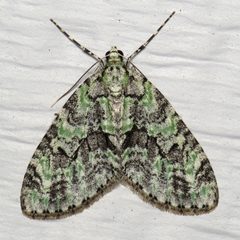
mottled gray carpet moth, Mottled Gray Carpet
Cladara limitaria is a geometrid found across North America from Alaska to Newfoundland and south to Alabama. are active in spring, with a wingspan of 21–28 mm. Larvae feed on sheep laurel and conifers. The inhabits deciduous, mixed, and coniferous forests and is attracted to light.

Pronunciation
How to pronounce Cladara limitaria: //kləˈdɛəɹə ˌlɪmɪˈtɛəɹiə//
These audio files are automatically generated. While they are not always 100% accurate, they are a good starting point.
Identification
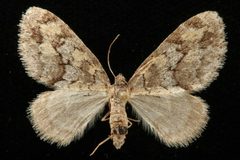
Distinguished by its mottled gray coloration and spring period (April–June). The combination of small size, gray mottled wings, and in North American forests helps separate it from similar carpet moths. MONA/Hodges number 7637.
Images
Habitat
Deciduous, mixed, and coniferous forests.
Distribution
North America: Alaska west to Newfoundland and Labrador east, south to Alabama. Canadian records include Alberta, Manitoba, and Saskatchewan.
Seasonality
active April to June.
Diet
Larvae feed on sheep laurel (Kalmia angustifolia) and conifers.
Host Associations
- Kalmia angustifolia - larval food plantsheep laurel
- Coniferae - larval food plantconifers generally
Life Cycle
Complete with , larva, pupa, and stages. Specific timing of stages not documented.
Behavior
are attracted to light.
Ecological Role
Larval herbivore on woody plants; specific ecological impacts not documented.
Human Relevance
Attracted to artificial light sources. No significant economic or agricultural impact documented.
Similar Taxa
- Other Cladara speciesSimilar gray carpet moth appearance; requires examination of genitalia or specific wing pattern details for separation
- Other Larentiinae mothsShared small size, spring , and forest ; identification relies on subtle wing pattern differences