
Cladara
Hulst, 1896
Species Guides
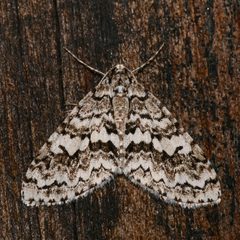
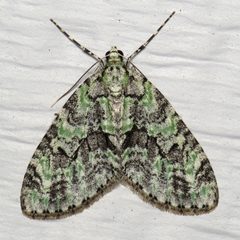
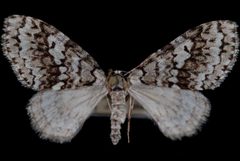
3- Cladara anguilineata(angle-lined carpet moth)
- Cladara atroliturata(the scribbler)
- Cladara limitaria(mottled gray carpet moth)
Cladara is a of in the Geometridae, Larentiinae, established by George Duryea Hulst in 1896. The genus contains at least four described distributed primarily in North America. Members are small to medium-sized geometrid moths, though specific morphological characteristics defining the genus remain poorly documented in available literature.
Pronunciation
How to pronounce Cladara: /kləˈdɛɹə/
These audio files are automatically generated. While they are not always 100% accurate, they are a good starting point.
Identification
Identification to level requires examination of genitalia and wing venation patterns. The four described (C. anguilineata, C. atroliturata, C. limitaria, C. ustata) are distinguished primarily by subtle differences in forewing pattern and coloration. C. limitaria and C. anguilineata show more pronounced wavy transverse lines on the forewings compared to C. atroliturata. Accurate species-level identification typically requires dissection and reference to original species descriptions.
Images
Distribution
North America; recorded from the United States including Vermont. Specific range boundaries for individual within the are not well documented.
Similar Taxa
- EupitheciaBoth are small geometrid moths in Larentiinae with similar resting posture and general appearance; Eupithecia is far more speciose and often distinguished by more complex forewing patterns and different larval associations
- AnticleaOverlaps in distribution and general ; Anticlea often show more uniform ground coloration and reduced transverse markings compared to Cladara
More Details
Taxonomic history
The was erected by Hulst in 1896, but has received limited subsequent taxonomic revision. The four currently assigned to Cladara were originally described under other genera (Eupithecia, Larentia, Cidaria) and later transferred. The genus placement within Larentiinae is based on morphological characters, though molecular phylogenetic studies of this group remain sparse.
Research needs
Available literature provides minimal information on larval , plants, or for any Cladara . The would benefit from modern taxonomic revision combining morphological and molecular data.