
Thera juniperata
(Linnaeus, 1758)
Juniper Carpet
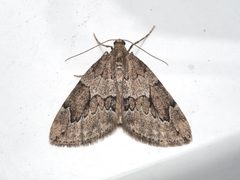
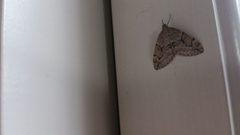
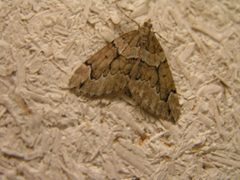
Thera juniperata, commonly known as the Juniper Carpet, is a in the Geometridae. It occurs throughout Europe and the Near East, with records also from North America. The species is considered uncommon and locally distributed, primarily due to its specialized larval dependence on juniper as a food source. are active in late autumn, with the species exhibiting a single per year.
Pronunciation
How to pronounce Thera juniperata: /ˈθɛ.ra juː.nɪ.pəˈraː.ta/
These audio files are automatically generated. While they are not always 100% accurate, they are a good starting point.
Identification
The Juniper Carpet can be distinguished from similar Thera by its specific association with juniper and its late autumn period. Forewing patterns and coloration should be compared against congeneric species where ranges overlap; precise wing markings and genitalia examination may be necessary for definitive identification.
Images
Habitat
Associated with juniper (Juniperus) stands, including both native and cultivated specimens. include heathland, scrub, woodland edges, and gardens where juniper occurs.
Distribution
Europe (widespread but local), the Near East, and North America. Records confirmed from Belgium (including Brussels-Capital, Flemish, and Walloon regions) and other European countries.
Seasonality
fly in late autumn, typically October to November depending on latitude. Single-brooded ().
Diet
Larvae feed exclusively on juniper (Juniperus ). feeding habits not documented.
Host Associations
- Juniperus - primary larval food plantSpecialized dependency; larvae feed on juniper foliage
Life Cycle
with one per year. Larvae develop on juniper through spring and summer, pupating in autumn. emerge in late autumn to mate and oviposit.
Similar Taxa
- Thera species (congeners)Similar wing patterns and body form; require examination of genitalia or specificity to distinguish
- Other Larentiinae mothsShared characteristics including resting posture and general wing shape; identification to requires detailed examination
Sources and further reading
- BugGuide
- GBIF taxonomy match
- iNaturalist taxon
- NCBI Taxonomy
- Catalogue of Life
- Could Bee Sting Therapy Possibly Have a Role in COVID-19 Treatment? | Bug Squad
- Growing Interest in Bee Sting Therapy Research as a Possible COVID-19 Treatment? | Bug Squad
- Bruce Hammock: From Researching Insects to Helping Humankind | Bug Squad
- Did You Miss the UC Davis-Based COVID-19 Symposium? | Bug Squad
- Bruce Hammock: From ResearchIng Insect Science to Researching Autism and Schizophrenia | Bug Squad
- Harvard, UC Davis and Ionova Researchers: Hammock Lab Drug May Help Pancreatic and Liver Cancer Patients | Bug Squad