
Rheumaptera subhastata
(Nolcken, 1870)
white-banded black moth
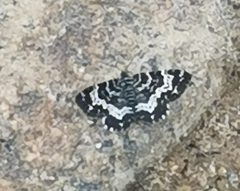
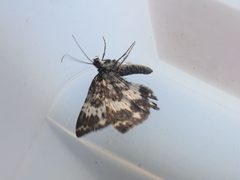
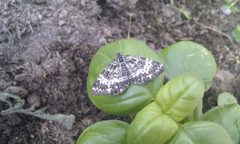
Rheumaptera subhastata is a geometrid occurring across the Palearctic and Nearctic realms, with a broad distribution in western North America. are active in late spring and early summer, with a single . The is one of two Rheumaptera in North America, closely related to and often confused with R. hastata.
Pronunciation
How to pronounce Rheumaptera subhastata: //rɛ.uˈmæp.tɛ.ra ˌsʌb.hæˈstæ.tə//
These audio files are automatically generated. While they are not always 100% accurate, they are a good starting point.
Identification
can be distinguished from the sympatric Rheumaptera hastata by wing pattern characteristics detailed in diagnostic keys. Mature larvae differ from R. hastata in morphological features allowing -level identification. The specific epithet 'subhastata' references its similarity to hastata.
Images
Distribution
Palearctic and Nearctic realms; widely distributed in western North America. European records include Belgium (Walloon Region, Liège province).
Seasonality
on wing from mid May to mid July; one per year.
Diet
Larvae feed on foliage of Alnus (alders).
Host Associations
- Alnus - larval plantlarvae feed on foliage
Life Cycle
One per year; larvae fold leaves into tent-like structures for shelter.
Behavior
Larvae construct leaf tents by folding a single leaf.
Similar Taxa
- Rheumaptera hastataSympatric in North America; similar wing patterns and larval require keys for reliable separation.