
Hydriomena nubilofasciata
(Packard, 1871)
oak winter highflier
Hydriomena nubilofasciata, commonly known as the oak winter highflier, is a small geometrid that is active during winter months. are associated with oak trees and fly in late January and February. The is one of the few North American moths with adult activity in mid-winter.
Pronunciation
How to pronounce Hydriomena nubilofasciata: /haɪdriˈoʊmɪnə njuˌbɪloʊˌfæʃiˈɑtə/
These audio files are automatically generated. While they are not always 100% accurate, they are a good starting point.
Identification
Distinguished from other winter-flying geometrids by its association with oak and period in late January to February. The specific epithet 'nubilofasciata' refers to the cloudy-banded wing pattern. Separation from congeneric requires examination of genitalia or detailed wing pattern analysis.
Images
Appearance
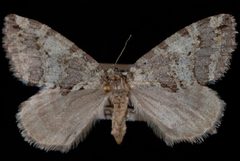
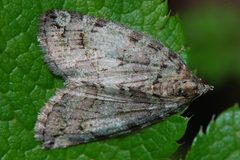
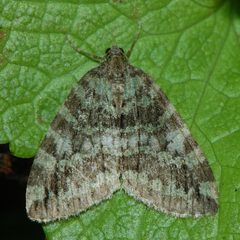
have a wingspan of 24–30 mm. Wings are grayish with darker transverse lines and a somewhat mottled appearance. The lacks bright coloration, consistent with its winter-active habit. Resting posture typical of Geometridae, with wings held flat or slightly overlapping.
Habitat
Associated with oak trees (Quercus spp.). are found in woodland and forested areas where oaks are present. Specific larval plant microhabitat not documented in available sources.
Distribution
Recorded from North America, with confirmed presence in the northeastern United States including Vermont. Distribution likely broader within eastern North American oak forests, but precise range boundaries are not well documented.
Seasonality
are active in late January and February. This represents an unusually early period for a temperate North American , with activity occurring during winter months.
Behavior
fly during winter months when temperatures permit, an uncommon trait among North American Lepidoptera. Activity is centered around oak trees, suggesting either adult feeding or oviposition associated with this .
Similar Taxa
- Other Hydriomena speciesMany occur in similar but differ in period; most Hydriomena fly in spring or summer rather than mid-winter
- Operophtera brumata (winter moth)Also a winter-flying geometrid, but occurs later (November–December in North America) and shows in wing reduction
More Details
Taxonomic authority
First described by Packard in 1871. The MONA/Hodges number 7276 is used in North American lepidopteran faunal works.