
Hydriomena
Hübner, [1825]
highflyers
Species Guides
39Hydriomena is a of geometrid moths comprising approximately 70 described , primarily distributed across the Northern Hemisphere. The genus includes several well-known species such as the July highflyer (H. furcata) and May highflyer (H. impluviata). Species exhibit highly variable coloration and cryptic patterning that provides camouflage against bark and lichen. Larvae feed on leaves of deciduous woody plants, with some species reaching high densities and causing significant defoliation.
Pronunciation
How to pronounce Hydriomena: /ˌhaɪdɪˈoʊmɪnə/
These audio files are automatically generated. While they are not always 100% accurate, they are a good starting point.
Identification
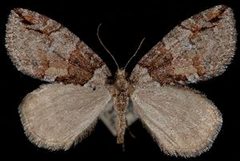
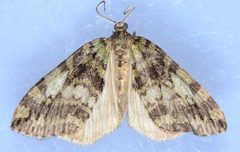
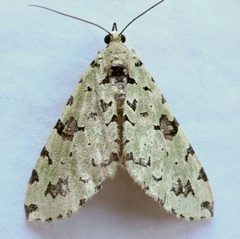
Forewings typically display wavy transverse bands of alternating dark and light shading, creating disruptive patterning effective against patchy backgrounds. Coloration ranges from green and black-banded forms to dark reddish-brown morphs. Wing patterns provide on tree bark and lichen-covered surfaces. Specific identification requires examination of genitalia and wing pattern details.
Images
Habitat
Woodlands, moorlands, hedgerows, and suburban areas. Associated with plants including willow, poplar, alder, birch, and heather.
Distribution
Widespread across the Northern Hemisphere. Present in Europe and Asia from Portugal and Ireland eastward to Russia and Japan; broadly distributed in Canada and the United States. Records from Denmark, Norway, Sweden, and Vermont (USA).
Seasonality
of H. furcata are on the wing in July and August. H. impluviata, the May highflyer, is active in May. Many exhibit .
Diet
Larvae feed on leaves of deciduous woody plants. Documented for H. furcata include willow (Salix), poplar (Populus), alder (Alnus), birch (Betula), bilberry (Vaccinium myrtillus), and heather (Calluna vulgaris).
Host Associations
- Salix - larval food plantwillow
- Populus - larval food plantpoplar
- Alnus - larval food plantalder
- Betula - larval food plantbirch
- Vaccinium myrtillus - larval food plantbilberry
- Calluna vulgaris - larval food plantheather
Life Cycle
in H. furcata. Late instar larvae spin small silken feeding webs on mature heather plants.
Behavior
through forewing patterning matching bark and lichen substrates. Highly variable coloration includes distinct green versus dark reddish-brown forms. Larvae of H. furcata at high densities can consume substantial vegetation, with records of 50% of heather growth consumed.
Ecological Role
Herbivore; significant defoliator of heather and other deciduous plants at high larval densities.
Similar Taxa
- Other Larentiinae generaSimilar wing patterns and body form; distinguished by specific banding patterns and genitalia structure
More Details
Genome sequencing
Hydriomena furcata has a 423.3 Mb chromosomally complete assembly with 28 chromosomal pseudomolecules (27 + Z ), 15.89 kb mitochondrial genome, and 17,324 protein-coding genes.
Extinct species
Hydriomena? protrita Cockerell, 1922 from the Priabonian age Florissant Formation is possibly a member of this .