
Eupithecia spermaphaga
(Dyar, 1917)
fir cone looper
Eupithecia spermaphaga is a small geometrid native to western North America. The is notable for its specialized larval : caterpillars bore into and feed within the cones of fir and Douglas-fir trees. are active across multiple months from spring through fall, with records spanning March through October. The species has been documented visiting apple flowers at night, contributing to pollination services.
Pronunciation
How to pronounce Eupithecia spermaphaga: /juː.pɪˈθiː.ʃə spɜːrˈmæfəɡə/
These audio files are automatically generated. While they are not always 100% accurate, they are a good starting point.
Identification
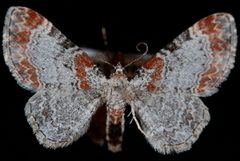
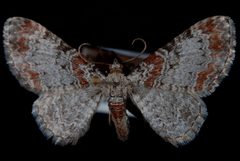
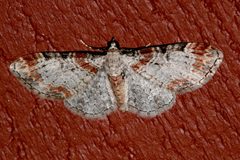
Identified as a Eupithecia by narrow wings and unique resting posture. Distinguished from other western North American Eupithecia by association with conifer cone-boring larval and specific geographic range. recorded March, April, July, August, September, and October.
Images
Appearance
Small with wingspan of 23–26 mm. Ground color exhibits a gray tint. As a member of Eupithecia, possesses narrow wings and characteristic resting posture typical of 'pug' moths.
Habitat
Associated with coniferous forests. Larval specifically within cones of fir (Abies) and Douglas-fir (Pseudotsuga) trees. habitat includes forested areas where conifers occur.
Distribution
Western North America: British Columbia south through Oregon and Washington to Nevada and California.
Seasonality
active in multiple periods: March, April, July, August, September, and October. Pattern suggests possible or multivoltine , though this is not explicitly confirmed.
Diet
Larvae bore into and feed within cones of Abies concolor (white fir), Abies shastaensis (Shasta fir), and Pseudotsuga taxifolia (Douglas-fir). feeding habits not documented; has been observed visiting apple flowers.
Host Associations
- Abies concolor - larval larvae bore cones
- Abies shastaensis - larval larvae bore cones
- Pseudotsuga taxifolia - larval larvae bore cones
- Malus domestica - visitationobserved on apple flowers, pollination role possible
Life Cycle
Complete . Larvae are specialized cone-borers. Specific details of placement, site, and stage not documented.
Behavior
Larvae exhibit specialized boring within conifer cones. are and attracted to light. Has been documented visiting flowers at night.
Ecological Role
Larval stage functions as conifer cone herbivore. stage contributes to pollination; specifically documented visiting apple flowers in an agricultural context.
Human Relevance
Documented as visitor to apple flowers in Arkansas orchard study, suggesting potential role in crop pollination. Otherwise not known to be of economic significance.
Similar Taxa
- Other Eupithecia speciesMany 'pug' share narrow wings and similar resting posture; identification to level requires examination of genitalia or knowledge of larval association
- Dioryctria speciesAlso coneworm moths with larvae in conifer cones, but in Pyralidae; have different wing shape and resting posture