
Eupithecia nevadata
Packard, 1871
Nevada Pug
Eupithecia nevadata is a small pug moth in the Geometridae, first described by Alpheus Spring Packard in 1871. It occurs in western North America, with recognized in Nevada, California, Utah, Colorado, and southern California. The has been documented visiting apple flowers at night, contributing to pollination services.
Pronunciation
How to pronounce Eupithecia nevadata: /juː.pɪˈθiː.si.ə nɛvəˈdeɪtə/
These audio files are automatically generated. While they are not always 100% accurate, they are a good starting point.
Identification
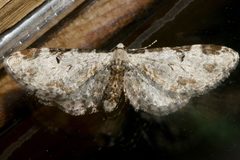
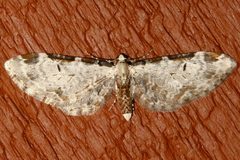
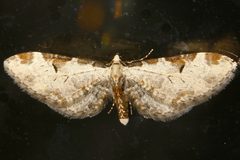
Distinguished from other Eupithecia by the combination of pale grey forewings with reddish-brown costal patches and western North American distribution. Definitive identification to species level often requires examination of genitalia, as is typical for many congeneric pug moths. The resting posture with narrow wings held flat or slightly folded is characteristic of the .
Images
Appearance
Small with wingspan approximately 20 mm. Forewings pale grey with various reddish-brown patches along the . Hindwings typically paler and less patterned. Body slender, consistent with the 'pug' moth form characteristic of the Eupithecia.
Habitat
Dry, mixed conifer forest with oaks at elevations around 7,000 feet, based on documented occurrence. Associated with plants Purshia and Ceanothus .
Distribution
Western North America. E. n. nevadata occurs in Nevada and California; E. n. geneura in Utah and Colorado; E. n. morensata in southern California.
Diet
Larvae feed on Purshia and Ceanothus . have been observed visiting apple flowers, suggesting nectar feeding.
Host Associations
- Purshia - larval
- Ceanothus - larval
Behavior
are attracted to lights at night. Documented as a visitor to apple flowers, contributing to nighttime pollination.
Ecological Role
Larval herbivore on Purshia and Ceanothus. contribute to pollination of flowering plants, including agricultural crops such as apple.
Human Relevance
Documented participant in pollination of apple orchards. Larval plants include native shrubs; no significant pest status reported.
Similar Taxa
- Other Eupithecia speciesMany congeneric pug moths share similar size, wing shape, and resting posture. -level identification requires examination of genitalia or detailed wing pattern analysis.
More Details
Subspecies
Three recognized: E. n. nevadata (Nevada, California), E. n. geneura Swett & Cassino, 1919 (Utah, Colorado), and E. n. morensata Cassino & Swett, 1922 (southern California).
Nocturnal pollination
Photographed on apple flowers during a 2021 study documenting significant contributions of insects to apple pollination in Arkansas, demonstrating that of this engage in flower visitation and potential pollen transfer.