
Eupithecia misturata
(Hulst, 1896)
Tamarack Looper
Eupithecia misturata is a small geometrid in the Eupithecia, commonly known as pugs. First described by George Duryea Hulst in 1896, it is widely distributed across western North America. The has been documented visiting apple flowers and other flowering plants, contributing to pollination services. Two are recognized: E. m. misturata and E. m. delzurata.
Pronunciation
How to pronounce Eupithecia misturata: //juːpɪˈθiːʃə ˌmɪstəˈreɪtə//
These audio files are automatically generated. While they are not always 100% accurate, they are a good starting point.
Identification
Members of the Eupithecia are recognized by their narrow wings and unique resting posture. Eupithecia misturata can be distinguished from other Eupithecia by genitalia dissection, which is typically required for accurate species-level identification in this genus. The E. m. misturata occurs from southern California north to British Columbia and southern Alberta and east to the Rocky Mountains of Colorado, Utah, and New Mexico, while E. m. delzurata is restricted to California.
Images
Appearance
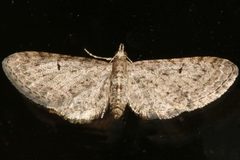
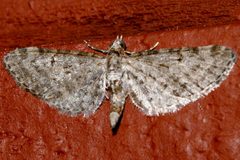
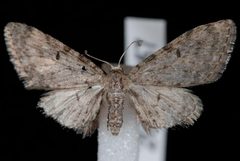
have a wingspan of approximately 16–18 mm. As a member of the Eupithecia, it has narrow wings and adopts a distinctive resting posture characteristic of pug moths. Specific coloration and pattern details for this are not documented in the provided sources.
Habitat
Inhabits dry, mixed conifer forest with oaks, as documented at 7,000 feet elevation in New Mexico. Associated with flowering trees and shrubs.
Distribution
Widely distributed in western North America. Documented from southern California north to British Columbia and southern Alberta, and east to the Rocky Mountains of Colorado, Utah, and New Mexico. Additional records include Manitoba, Saskatchewan, and Vermont.
Seasonality
have been observed at blacklights in late August. Activity period likely extends through the growing season when plants are in flower.
Diet
Larvae feed on flowering trees and shrubs, including Holodiscus discolor, Ceanothus velutinus, Arctostaphylos , and Quercus species. have been observed visiting apple flowers and likely feed on nectar.
Host Associations
- Holodiscus discolor - larval flowering shrub
- Ceanothus velutinus - larval flowering shrub
- Arctostaphylos - larval of flowering shrubs
- Quercus - larval oak
- Malus - visitationapple flowers visited by
Life Cycle
Complete with , larval, pupal, and stages. Larvae are foliage feeders on woody plants. Specific timing and stage are not documented.
Behavior
are and attracted to blacklights. They have been documented visiting apple flowers at night, indicating potential nocturnal pollination activity. Larvae feed externally on foliage of plants.
Ecological Role
Larval herbivore on woody shrubs and trees. contribute to pollination of flowering plants, including agricultural crops such as apple. Serves as potential for , including members of Agathidinae (Braconidae).
Human Relevance
Documented as a visitor to apple flowers, contributing to pollination services in fruit production. The illustrates the dual ecological roles of —as herbivores in the larval stage and as as .
Similar Taxa
- Other Eupithecia species Eupithecia contains many similar-looking that typically require genitalia dissection for reliable identification; narrow wings and resting posture are shared traits across the genus.
More Details
Subspecies
Two recognized: Eupithecia misturata misturata (widespread across western North America) and Eupithecia misturata delzurata Cassino & Swett 1922 (California only).
Nocturnal pollination research
A Eupithecia , likely including E. misturata given its distribution, was photographed on apple flowers during a 2021 study demonstrating significant pollination contributions to apple production in Arkansas.