
Hydrelia
Hübner, 1825
Species Guides
5- Hydrelia albifera(fragile white carpet moth)
- Hydrelia brunneifasciata
- Hydrelia condensata
- Hydrelia inornata(Unadorned Carpet Moth)
- Hydrelia lucata(light carpet moth)
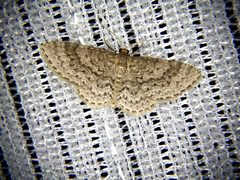
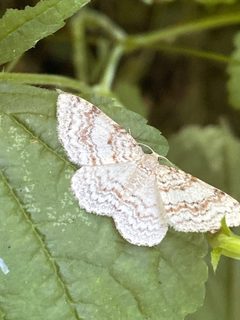
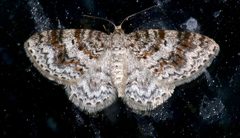
Hydrelia is a of in the Geometridae, first described by Jacob Hübner in 1825. The genus contains over 60 described distributed primarily across the Holarctic region, with particular diversity in Asia. Species are generally small to medium-sized geometrid moths, many with distinctive wing patterns. Several species have acquired in English, including the waved carpet (H. sylvata) and the small yellow wave (H. flammeolaria).
Pronunciation
How to pronounce Hydrelia: /hɪˈdɹiːlɪə/
These audio files are automatically generated. While they are not always 100% accurate, they are a good starting point.
Identification
Hydrelia are small to medium-sized geometrid moths with relatively broad, rounded wings. Many species exhibit characteristic wing patterns including wavy transverse lines, bands, or spotted markings. The can be distinguished from related carpet moth genera by genitalia characteristics, particularly in males. Specific identification to species level generally requires examination of genitalia or detailed wing pattern analysis.
Images
Distribution
Holarctic distribution with strong representation in the Palearctic. Records confirmed from Denmark, Norway, Sweden, and the northeastern United States (Vermont). The shows highest in East Asia, particularly Japan and China, with numerous described from these regions.
Similar Taxa
- AsthenotrichaFormerly confused with Hydrelia; several were transferred from Hydrelia to Asthenotricha based on revised classification
- Other Larentiinae generaSimilar small geometrid moths with carpet-like wing patterns; genitalia examination typically required for definitive separation
More Details
Taxonomic history
The has undergone significant taxonomic revision. Five African were transferred to the genus Asthenotricha. The authorship is sometimes cited as Guenée, 1841 in older literature, though Hübner, 1825 has priority.
Species diversity
Over 60 are currently recognized, with new species continuing to be described from Asia, particularly by Japanese entomologist Hiroshi Inoue who described numerous species in the 1980s and 1990s.