
Hydrelia inornata
(Hulst, 1896)
Unadorned Carpet Moth
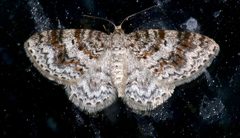
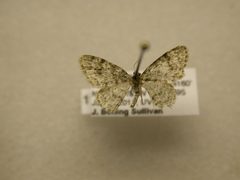
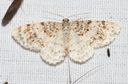
Hydrelia inornata, the unadorned carpet , is a small moth in the Geometridae. It is characterized by its relatively plain, unmarked wing pattern that distinguishes it from more . The is broadly distributed across eastern and central North America, with records spanning from the Canadian provinces of New Brunswick, Nova Scotia, Ontario, Quebec, and Saskatchewan south through the United States to North Carolina and Tennessee. The wingspan is approximately 15 mm, making it one of the smaller members of the Hydrelia.
Pronunciation
How to pronounce Hydrelia inornata: /hɪˈdriːliə ɪnɔːrˈneɪtə/
These audio files are automatically generated. While they are not always 100% accurate, they are a good starting point.
Identification
The specific epithet "inornata" (meaning "unadorned") refers to the relatively plain wing pattern that distinguishes this from other Hydrelia species, which typically exhibit more prominent markings, lines, or spots. The wingspan of about 15 mm is notably small for the . Positive identification to species level likely requires examination of genitalia or other microscopic features, as many Hydrelia species are similar in general appearance.
Images
Distribution
Eastern and central North America. Canadian records: New Brunswick, Nova Scotia, Ontario, Quebec, and Saskatchewan. United States records: Indiana, Iowa, Kentucky, Maine, Maryland, Massachusetts, New Hampshire, New York, North Carolina, Ohio, Pennsylvania, Tennessee, and West Virginia. The distribution spans , temperate deciduous, and mixed forest regions.
Similar Taxa
- Other Hydrelia speciesMany share similar size and general wing shape but typically exhibit more prominent wing markings, lines, or spots that H. inornata lacks. Examination of genitalia is often necessary for definitive separation.
More Details
Taxonomic note
The was described by George D. Hulst in 1896. The Hydrelia belongs to the Larentiinae, a diverse group of carpet moths within Geometridae.
Observation frequency
iNaturalist records over 5,000 observations, suggesting the is relatively commonly encountered by observers in its range, though this may reflect observer effort rather than true abundance.