
Hydrelia albifera
(Walker, 1866)
fragile white carpet moth, Fragile White Carpet
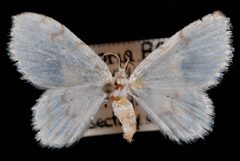
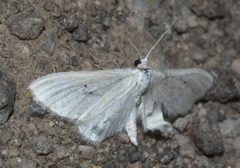
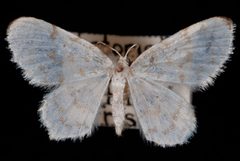
Hydrelia albifera is a small geometrid with a wingspan of 16–18 mm, found across much of North America from Newfoundland to British Columbia. are active from May to August, with one annually in northern regions and two in the south. The larvae feed on specific plants including red-osier dogwood, alternate-leaved dogwood, and paper birch.
Pronunciation
How to pronounce Hydrelia albifera: /hɪˈdrɛl.jə ælˈbɪ.fɛ.rə/
These audio files are automatically generated. While they are not always 100% accurate, they are a good starting point.
Identification
The can be distinguished from other Hydrelia by its small size (16–18 mm wingspan), white coloration, and the specific combination of plant associations with Cornus and Betula species. The 'fragile white carpet' references its delicate appearance and white ground color.
Images
Habitat
Deciduous and mixed-wood forests
Distribution
North America: Newfoundland to British Columbia, south in the eastern United States to the Gulf states. Specific records from Alberta, Manitoba, and Saskatchewan in Canada, and Vermont in the United States.
Seasonality
on wing from May to August. One per year in northern parts of range; two generations may occur further south.
Diet
Larvae feed on leaves of Cornus stolonifera (red-osier dogwood), Cornus alternifolia (alternate-leaved dogwood), and Betula papyrifera (paper birch). feeding habits are not documented.
Host Associations
- Cornus stolonifera - larval plantred-osier dogwood
- Cornus alternifolia - larval plantalternate-leaved dogwood
- Betula papyrifera - larval plantpaper birch
Life Cycle
One per year in northern regions; two generations per year in southern parts of range. stage not documented in available sources.
Ecological Role
Larval herbivore on deciduous trees and shrubs; contributes to nutrient cycling in forest through leaf consumption.
Similar Taxa
- Other Hydrelia speciesSimilar small size and white or pale coloration; distinguished by specific wing pattern details and plant associations where known
- Other Geometridae in LarentiinaeSimilar body plan and resting posture; distinguished by combination of size, color, and geographic range
More Details
Nomenclature
Originally described as Acidalia albifera by Francis Walker in 1866; later transferred to Hydrelia.
Observation frequency
Well-documented with over 1,300 observations on iNaturalist, indicating it is regularly encountered within its range.